Did 308,000 cancelled Ohio voter registrations
put Bush back in the White House?
FreePress - February 28, 2006
While life goes on during the Bush2 nightmare, so does the research on what really happened here in 2004 to give George W. Bush a second term.
Pundits throughout the state and nation---many of them alleged Democrats---continue to tell those of us who question Bush's second coming that we should "get over it," that the election is old news.
But things get curiouser and curiouser.
In our 2005 compendium HOW THE GOP STOLE OHIO'S 2004 ELECTION & IS RIGGING 2008 (www.freepress.org), we list more than a hundred different ways the Republican Party denied the democratic process in the Buckeye State. For a book of documents to be published September 11 by the New Press entitled WHAT HAPPENED IN OHIO?, we are continuing to dig.
It turns out, we missed more than a few of the dirty tricks Karl Rove, Ken Blackwell and their GOP used to get themselves four more years. In an election won with death by a thousand cuts, some that are still hidden go very deep. Over the next few weeks we will list them as they are verified.
Read More >>
28 February 2006

27 February 2006
VIDEO EXCLUSIVE: Arizona Election Official's Diebold Tirade Caught on Tape as Electoral Integrity Battle Nears Boiling Point
Pima County Election Director Brad Nelson Launches Outburst Towards Election Reform Advocate in Response to Question About New Touch-Screen Voting Machines
Letter Calls for Censure of Official as Onlookers Stunned by Encounter, Feared Violence Would Break Out...
Bradblog - 2.27.06
The battle between Election Officials and Election Integrity Advocates has been simmering and intensifying for some time. Last week, in Arizona, one such confrontation boiled over briefly into an outburst at a public meeting which was documented on video tape. In what could be a preview for the Electoral Integrity fight still to come, Pima County, Arizona's Election Director Brad Nelson went into a short tirade last Tuesday as the video camera rolled during a local Democratic precinct council meeting in the state's 26th Legislative District.
The BRAD BLOG has obtained the exclusive video of the event which reveals the Republican Nelson flying off the handle and shouting as he confronts Election Integrity Advocate, John Brakey, "nose to nose" during a question about Diebold's DRE (touch-screen) voting machines. Before Brakey was able to get to his main question concerning Nelson's plans for Logic and Accuracy testing on the machines, he was interupted by Nelson's outburst over whether or not he had, in fact, signed a contract for use of the new voting machines in the county.
Diebold's hackable touch-screen machines have been recently approved for first-time use in the state by Arizona's Secretary of State Jan Brewer.
Read More >>
Pima County Election Director Brad Nelson Launches Outburst Towards Election Reform Advocate in Response to Question About New Touch-Screen Voting Machines
Letter Calls for Censure of Official as Onlookers Stunned by Encounter, Feared Violence Would Break Out...
Bradblog - 2.27.06
The battle between Election Officials and Election Integrity Advocates has been simmering and intensifying for some time. Last week, in Arizona, one such confrontation boiled over briefly into an outburst at a public meeting which was documented on video tape. In what could be a preview for the Electoral Integrity fight still to come, Pima County, Arizona's Election Director Brad Nelson went into a short tirade last Tuesday as the video camera rolled during a local Democratic precinct council meeting in the state's 26th Legislative District.
The BRAD BLOG has obtained the exclusive video of the event which reveals the Republican Nelson flying off the handle and shouting as he confronts Election Integrity Advocate, John Brakey, "nose to nose" during a question about Diebold's DRE (touch-screen) voting machines. Before Brakey was able to get to his main question concerning Nelson's plans for Logic and Accuracy testing on the machines, he was interupted by Nelson's outburst over whether or not he had, in fact, signed a contract for use of the new voting machines in the county.
Diebold's hackable touch-screen machines have been recently approved for first-time use in the state by Arizona's Secretary of State Jan Brewer.
Read More >>
26 February 2006
Supreme Court to Vote on Election-Law Cases
LA Times - February 26 2006
WASHINGTON — The Supreme Court will take up states' rights — of both the blue- and red-state variety — in a pair of election-law cases to be heard this week that could have a big impact on the future of American politics.
Tiny Vermont, a true blue state, hopes to restore small-town democracy by greatly limiting the role of money in politics. If its new spending caps win before the high court, they could change how campaigns are conducted across the nation.
Meanwhile, Texas, the biggest of the red states, is defending its right to redraw its electoral districts to give its GOP majority more seats in Congress. If its extraordinary mid-decade shift wins in the high court, other states have signaled they will do the same.
The pair of cases will also give strong clues about the court's newest members: Chief Justice John G. Roberts Jr. and Associate Justice Samuel A. Alito Jr.
Read More >>
LA Times - February 26 2006
WASHINGTON — The Supreme Court will take up states' rights — of both the blue- and red-state variety — in a pair of election-law cases to be heard this week that could have a big impact on the future of American politics.
Tiny Vermont, a true blue state, hopes to restore small-town democracy by greatly limiting the role of money in politics. If its new spending caps win before the high court, they could change how campaigns are conducted across the nation.
Meanwhile, Texas, the biggest of the red states, is defending its right to redraw its electoral districts to give its GOP majority more seats in Congress. If its extraordinary mid-decade shift wins in the high court, other states have signaled they will do the same.
The pair of cases will also give strong clues about the court's newest members: Chief Justice John G. Roberts Jr. and Associate Justice Samuel A. Alito Jr.
Read More >>
24 February 2006
Alaska Now Refuses Release of 2004 Election Data
Citing Security Concerns
Bradblog - 2.24.06
[...] A long-standing public records request for the release of Election 2004 database files created by Diebold's voting system had been long delayed after several odd twists and turns, including the revelation of a contract with the state claiming the information to be a "company secret."
But while it finally appeared as though the state had agreed to release the information (after reserving the right to "manipulate the data" in consultation with Diebold before releasing it), the state's top Security Official has now -- at the last minute -- stepped in to deny the request. The grounds for the denial: the release of the information poses a "security risk" to the state of Alaska.
The state Democratic party has been attempting since December of last year to review the Diebold GEMS tabulator data files from the 2004 election in order to audit some of the strange results discovered in the state, including a reported voter turnout of more than 200% in some areas.
"At this point," Democratic Party spokesperson Kay Brown told the Anchorage Daily News in January, "it's impossible to say whether the correct candidates were declared the winner in all Alaska races from 2004."
Some of the questionable results from the 2004 Election were outlined in a January 23rd letter [WORD] to the state's Division of Elections from the Alaska Democratic Party chairman, Jake Metcalfe. Amongst the anomolies detailed in Metcalfe's letter: "district-by-district vote totals add up to 292,267 votes for President Bush, but his official total was only 190,889."
[...] So just to recap: First the voters of Alaska were not allowed to see their own voting data from the 2004 Election because it was the proprietary "company secret" property of Diebold. Then they would be allowed to see it as long as the state and Diebold could "manipulate the data" before releasing it. And now finally it's determined that allowing the voters to see how they actually voted in the 2004 Election would be a "security risk" to the state of Alaska.
No word yet on whether the Alaska Democratic Party will take the matter to court to seek resolution.
Read More >>
Citing Security Concerns
Bradblog - 2.24.06
[...] A long-standing public records request for the release of Election 2004 database files created by Diebold's voting system had been long delayed after several odd twists and turns, including the revelation of a contract with the state claiming the information to be a "company secret."
But while it finally appeared as though the state had agreed to release the information (after reserving the right to "manipulate the data" in consultation with Diebold before releasing it), the state's top Security Official has now -- at the last minute -- stepped in to deny the request. The grounds for the denial: the release of the information poses a "security risk" to the state of Alaska.
The state Democratic party has been attempting since December of last year to review the Diebold GEMS tabulator data files from the 2004 election in order to audit some of the strange results discovered in the state, including a reported voter turnout of more than 200% in some areas.
"At this point," Democratic Party spokesperson Kay Brown told the Anchorage Daily News in January, "it's impossible to say whether the correct candidates were declared the winner in all Alaska races from 2004."
Some of the questionable results from the 2004 Election were outlined in a January 23rd letter [WORD] to the state's Division of Elections from the Alaska Democratic Party chairman, Jake Metcalfe. Amongst the anomolies detailed in Metcalfe's letter: "district-by-district vote totals add up to 292,267 votes for President Bush, but his official total was only 190,889."
[...] So just to recap: First the voters of Alaska were not allowed to see their own voting data from the 2004 Election because it was the proprietary "company secret" property of Diebold. Then they would be allowed to see it as long as the state and Diebold could "manipulate the data" before releasing it. And now finally it's determined that allowing the voters to see how they actually voted in the 2004 Election would be a "security risk" to the state of Alaska.
No word yet on whether the Alaska Democratic Party will take the matter to court to seek resolution.
Read More >>
Americans United Welcomes IRS Crackdown
On Unlawful Church Electioneering
February 24, 2006
Federal Tax Agency Investigated Partisan Politicking By Nonprofits In 2004 And Plans To Do So Again This Year, Says New Report
WASHINGTON - February 24 - Americans United for Separation of Church and State today welcomed a new report by the Internal Revenue Service detailing its enforcement of the federal tax law barring partisan political activity by churches and other charities.
The report notes that the IRS examined activities by 132 non-profits from 2004 as part of its initiative. It reports that “fewer than half” were churches. The IRS concluded that in many of the cases, significant violations of the law had occurred. The tax agency also announced plans to vigorously enforce the law during this election year.
“This report proves that the IRS intends to fully enforce the law barring houses of worship from intervening in political campaigns,” said the Rev. Barry W. Lynn, executive director of Americans United. “Pastors tempted to follow the Religious Right’s siren song into partisan activity need to sit up and take notice.”
Continued Lynn, “Churches have no business becoming cogs in a candidate’s political machine. It damages the integrity of the church, and it violates federal tax law. This report indicates that the IRS takes allegations of violations seriously.”
[...] “This report should lay to rest Religious Right claims that houses of worship have a right to engage in partisan politicking,” said Lynn. “They don’t, and any that ignore the law and do so anyway could face severe sanctions.”
Read More >>
On Unlawful Church Electioneering
February 24, 2006
Federal Tax Agency Investigated Partisan Politicking By Nonprofits In 2004 And Plans To Do So Again This Year, Says New Report
WASHINGTON - February 24 - Americans United for Separation of Church and State today welcomed a new report by the Internal Revenue Service detailing its enforcement of the federal tax law barring partisan political activity by churches and other charities.
The report notes that the IRS examined activities by 132 non-profits from 2004 as part of its initiative. It reports that “fewer than half” were churches. The IRS concluded that in many of the cases, significant violations of the law had occurred. The tax agency also announced plans to vigorously enforce the law during this election year.
“This report proves that the IRS intends to fully enforce the law barring houses of worship from intervening in political campaigns,” said the Rev. Barry W. Lynn, executive director of Americans United. “Pastors tempted to follow the Religious Right’s siren song into partisan activity need to sit up and take notice.”
Continued Lynn, “Churches have no business becoming cogs in a candidate’s political machine. It damages the integrity of the church, and it violates federal tax law. This report indicates that the IRS takes allegations of violations seriously.”
[...] “This report should lay to rest Religious Right claims that houses of worship have a right to engage in partisan politicking,” said Lynn. “They don’t, and any that ignore the law and do so anyway could face severe sanctions.”
Read More >>
IRS: Charities Overstepping Into Politics
Yahoo News - Feb 24, 2006
IRS exams found nearly three out of four churches, charities and other civic groups suspected of having violated restraints on political activity in the 2004 election actually did so, the agency said Friday.
Most of the examinations that have concluded found only a single, isolated incidence of prohibited campaign activity.
In three cases, however, the IRS uncovered violations egregious enough to recommend revoking the groups' tax-exempt status.
The vast majority of charities and churches followed the law, but the examinations found a "disturbing" amount of political intervention in the 2004 elections, IRS Commissioner Mark Everson said.
"It's disturbing not because it's pervasive, but because it has the potential to really grow and have a very bad impact on the integrity of charities and churches," Everson said in an interview.
The tax agency looked only at charities, churches and other tax-exempt organizations referred to the IRS for potentially violating laws that bar them from participating in or intervening in elections, including advocating for or against any candidate.
Those referred to the IRS represent a tiny fraction of more than 1 million tax-exempt organizations organized under section 501(c)(3) of the tax law.
The IRS examined 110 organizations referred to the tax agency for potentially violations, and 28 cases remain open.
Among the 82 closed cases, the IRS found prohibited politicking and sent a written warning to 55 organizations and assessed a penalty tax against one group. Those organizations included 37 churches and 19 other organizations.
[...] Among the prohibited activities, the examiners found that charities and churches had distributed printed material supporting a preferred candidate and assembled improper voter guides or candidate ratings.
Religious leaders had used the pulpit to endorse or oppose a particular candidate, and some groups had shown preferential treatment to candidates by letting them speak at functions.
Other charities and churches had made improper cash contributions to a candidate's political campaign.
Read More >>
Yahoo News - Feb 24, 2006
IRS exams found nearly three out of four churches, charities and other civic groups suspected of having violated restraints on political activity in the 2004 election actually did so, the agency said Friday.
Most of the examinations that have concluded found only a single, isolated incidence of prohibited campaign activity.
In three cases, however, the IRS uncovered violations egregious enough to recommend revoking the groups' tax-exempt status.
The vast majority of charities and churches followed the law, but the examinations found a "disturbing" amount of political intervention in the 2004 elections, IRS Commissioner Mark Everson said.
"It's disturbing not because it's pervasive, but because it has the potential to really grow and have a very bad impact on the integrity of charities and churches," Everson said in an interview.
The tax agency looked only at charities, churches and other tax-exempt organizations referred to the IRS for potentially violating laws that bar them from participating in or intervening in elections, including advocating for or against any candidate.
Those referred to the IRS represent a tiny fraction of more than 1 million tax-exempt organizations organized under section 501(c)(3) of the tax law.
The IRS examined 110 organizations referred to the tax agency for potentially violations, and 28 cases remain open.
Among the 82 closed cases, the IRS found prohibited politicking and sent a written warning to 55 organizations and assessed a penalty tax against one group. Those organizations included 37 churches and 19 other organizations.
[...] Among the prohibited activities, the examiners found that charities and churches had distributed printed material supporting a preferred candidate and assembled improper voter guides or candidate ratings.
Religious leaders had used the pulpit to endorse or oppose a particular candidate, and some groups had shown preferential treatment to candidates by letting them speak at functions.
Other charities and churches had made improper cash contributions to a candidate's political campaign.
Read More >>
23 February 2006
Report Details Bias at Voting Polls
ABCNews
Unfair tactics and confusing rules still make it tough for many minorities to cast election ballots, and the barriers are so common that the federal safeguards for voters must be renewed, a detailed new report from a civil rights group says.
"Protecting Minority Voters: The Voting Rights Act, 1982-2005" pulls together research and testimony from voters around the country to urge lawmakers to renew the parts of the 1965 Voting Rights Act that will expire in August 2007.
[...] The 125-page report was to be released at a Washington, D.C. news conference on Tuesday. Among its findings:
Polling places and voting hours in minority neighborhoods are routinely changed shortly before elections.
Election officials were found to have illegally purged voter lists and refused to translate election materials for citizens who are not fluent in English.
[...] Congress first passed the law in August 1965, months after black protesters trying to secure voting rights in Selma, Ala., were attacked by whites on the Edmund Pettus Bridge. Before then, it was common for jurisdictions especially in the South to make black voters take literacy tests and pay poll taxes before voting.
Key sections set to expire give federal officials unusual authority to oversee elections in states that have historically had problems with racial bias. They can send in election monitors, force states to translate voting materials or require states to get Department of Justice approval before changing election procedures.
Read More >>
National Commission on the Voting Rights Act >>
ABCNews
Unfair tactics and confusing rules still make it tough for many minorities to cast election ballots, and the barriers are so common that the federal safeguards for voters must be renewed, a detailed new report from a civil rights group says.
"Protecting Minority Voters: The Voting Rights Act, 1982-2005" pulls together research and testimony from voters around the country to urge lawmakers to renew the parts of the 1965 Voting Rights Act that will expire in August 2007.
[...] The 125-page report was to be released at a Washington, D.C. news conference on Tuesday. Among its findings:
Polling places and voting hours in minority neighborhoods are routinely changed shortly before elections.
Election officials were found to have illegally purged voter lists and refused to translate election materials for citizens who are not fluent in English.
[...] Congress first passed the law in August 1965, months after black protesters trying to secure voting rights in Selma, Ala., were attacked by whites on the Edmund Pettus Bridge. Before then, it was common for jurisdictions especially in the South to make black voters take literacy tests and pay poll taxes before voting.
Key sections set to expire give federal officials unusual authority to oversee elections in states that have historically had problems with racial bias. They can send in election monitors, force states to translate voting materials or require states to get Department of Justice approval before changing election procedures.
Read More >>
National Commission on the Voting Rights Act >>
Watchdog Group Questions 2004 Fla. Vote
Yahoo News - Feb 23, 2006
WEST PALM BEACH, Fla. - An examination of Palm Beach County's electronic voting machine records from the 2004 election found possible tampering and tens of thousands of malfunctions and errors, a watchdog group said Thursday.
Bev Harris, founder of BlackBoxVoting.org, said the findings call into question the outcome of the presidential race. But county officials and the maker of the electronic voting machines strongly disputed that and took issue with the findings.
[...] BlackBoxVoting.org, which describes itself as a nonpartisan, nonprofit citizens group, said it found 70,000 instances in Palm Beach County of cards getting stuck in the paperless ATM-like machines and that the computers logged about 100,000 errors, including memory failures.
Also, the hard drives crashed on some of the machines made by Oakland, Calif.-based Sequoia Voting Systems, some machines apparently had to be rebooted over and over, and 1,475 re-calibrations were performed on Election Day on more than 4,300 units, Harris said. Re-calibrations are done when a machine is malfunctioning, she said.
Read More >>
Yahoo News - Feb 23, 2006
WEST PALM BEACH, Fla. - An examination of Palm Beach County's electronic voting machine records from the 2004 election found possible tampering and tens of thousands of malfunctions and errors, a watchdog group said Thursday.
Bev Harris, founder of BlackBoxVoting.org, said the findings call into question the outcome of the presidential race. But county officials and the maker of the electronic voting machines strongly disputed that and took issue with the findings.
[...] BlackBoxVoting.org, which describes itself as a nonpartisan, nonprofit citizens group, said it found 70,000 instances in Palm Beach County of cards getting stuck in the paperless ATM-like machines and that the computers logged about 100,000 errors, including memory failures.
Also, the hard drives crashed on some of the machines made by Oakland, Calif.-based Sequoia Voting Systems, some machines apparently had to be rebooted over and over, and 1,475 re-calibrations were performed on Election Day on more than 4,300 units, Harris said. Re-calibrations are done when a machine is malfunctioning, she said.
Read More >>
Integrity of E-balloting System Still in Doubt
Los Angeles Times, Feb. 23, 2006
[...] As the last two presidential elections demonstrate, ballot results are of profound interest to everybody — including determined hackers with partisan agendas. Therefore, it's proper to demand of the high-tech machines replacing the paper ballots and punch cards of yore that they be technologically bulletproof. The Diebold systems certified by McPherson — an optical scanner that reads hand-marked ballots and a touch screen that totes up votes directly — fall well short of that standard.
How do we know this? It's the conclusion of a panel of computer security experts McPherson commissioned specifically to study Diebold's software. Three days after they issued their report Feb. 14, McPherson gave Diebold thumbs up, noting that the panel regarded the software problems it found as "manageable" and had said the risks could be "mitigated" if election officials took care.
But the experts were plainly troubled by flaws in Diebold's systems. The panel, which included David Jefferson of Lawrence Livermore National Laboratory and David Wagner of Berkeley, observed that the removable memory cards used by Diebold were vulnerable to undetectable acts of tampering.
The panel found 16 software bugs that could cede "complete control" of the system to hackers who might then "change vote totals, modify reports, change the names of candidates, change the races being voted on," and even crash the machines, bringing an election to a halt. Hackers wouldn't need to know passwords or cryptographic keys, or have access to any other part of the system, to do their dirty work. Voters, candidates and election monitors wouldn't necessarily know they'd been rooked.
The bugs lead some computer professionals to believe that Diebold's software designers never treated security as a high priority. "It's like they were making a mechanical device, and never heard of computer security," says David Dill, an expert in electronic voting at Stanford University who wasn't on the panel.
The bugs pale next to another discovery by the panel. This is the presence of a cryptographic key written into the source code, or basic software, of every Diebold touch-screen machine in the country. The researchers called this blunder tantamount to "a bank using the same PIN code for every ATM card they issued; if this PIN code ever became known, the exposure could be tremendous."
Here's the punch line: The Diebold key became known in 2003, when it was published by researchers at Johns Hopkins and Rice universities. It can be found today via a Google search. What's worse, the key was first identified in 1997 by a University of Iowa researcher, who promptly warned the manufacturer of the flaw, apparently to no avail.
Read More >>
Los Angeles Times, Feb. 23, 2006
[...] As the last two presidential elections demonstrate, ballot results are of profound interest to everybody — including determined hackers with partisan agendas. Therefore, it's proper to demand of the high-tech machines replacing the paper ballots and punch cards of yore that they be technologically bulletproof. The Diebold systems certified by McPherson — an optical scanner that reads hand-marked ballots and a touch screen that totes up votes directly — fall well short of that standard.
How do we know this? It's the conclusion of a panel of computer security experts McPherson commissioned specifically to study Diebold's software. Three days after they issued their report Feb. 14, McPherson gave Diebold thumbs up, noting that the panel regarded the software problems it found as "manageable" and had said the risks could be "mitigated" if election officials took care.
But the experts were plainly troubled by flaws in Diebold's systems. The panel, which included David Jefferson of Lawrence Livermore National Laboratory and David Wagner of Berkeley, observed that the removable memory cards used by Diebold were vulnerable to undetectable acts of tampering.
The panel found 16 software bugs that could cede "complete control" of the system to hackers who might then "change vote totals, modify reports, change the names of candidates, change the races being voted on," and even crash the machines, bringing an election to a halt. Hackers wouldn't need to know passwords or cryptographic keys, or have access to any other part of the system, to do their dirty work. Voters, candidates and election monitors wouldn't necessarily know they'd been rooked.
The bugs lead some computer professionals to believe that Diebold's software designers never treated security as a high priority. "It's like they were making a mechanical device, and never heard of computer security," says David Dill, an expert in electronic voting at Stanford University who wasn't on the panel.
The bugs pale next to another discovery by the panel. This is the presence of a cryptographic key written into the source code, or basic software, of every Diebold touch-screen machine in the country. The researchers called this blunder tantamount to "a bank using the same PIN code for every ATM card they issued; if this PIN code ever became known, the exposure could be tremendous."
Here's the punch line: The Diebold key became known in 2003, when it was published by researchers at Johns Hopkins and Rice universities. It can be found today via a Google search. What's worse, the key was first identified in 1997 by a University of Iowa researcher, who promptly warned the manufacturer of the flaw, apparently to no avail.
Read More >>
MORE KA-CHING
Unionleader via Buzzflash
More than $2.8 million.
That appears to be the new total of the Republican National Committee’s legal bill for the defense of convicted 2002 Republican phone-jamming conspirator Jim Tobin.
We reported two weeks ago that the RNC’s year-end financial report, on file with the Federal Election Committee, contained a $1.7 million payment to Williams and Connolly, the Washington law firm the RNC hired to represent Tobin.
The RNC wouldn’t say what it was for, but it had acknowledged last summer paying $722,000 for Tobin’s defense to that point.
The RNC’s latest report, filed last week, shows $330,000 more paid to Williams and Connolly on Jan. 26 for the old stand-by description “legal services.”
If it was also for Tobin’s defense, then the total is now more than $2.8 million.
And counting, perhaps. Tobin is fighting his December conviction by a federal trial court jury in Concord with several motions calling for the verdict to be thrown out and for a new trial.
Judge Steven McAuliffe has scheduled a hearing for March 17.
All those lawyer-hours cost (somebody) money.
——
THE CIVIL CASE
Paper continues to fly in the civil action brought in 2004 by the state Democratic Party against the GOP over the phone-jamming case, with a hearing on several motions scheduled for April.
Who knows what the outcome will be? But Democrats point out that a Virginia case, with arguably a less serious allegation than jamming get-out-vote-vote phone lines, ended up costing that state’s Republican Party big time.
In November 2004, the GOP Virginia paid 33 Democratic lawmakers $750,000 to settle an eavesdropping case, which, according to a Virginia news report at the time, had “bedeviled Republicans for more than two years.”
It seems the former Virginia GOP executive director had eavesdropped on private conference calls of Democratic officials who were discussing political and legal strategies. Reportedly, he eventually pleaded guilty to intercepting a wire communication, a felony.
The GOP agreed to pay the Democrats a $750,000 settlement.
The GOP attorneys in the Virginia case: Williams and Connolly.
By the way, the latest New Hampshire Republican State Committee financial report shows $1,772 on hand as of Jan. 31. Last month’s largest donor, perhaps as a parting gift, was outgoing state chair Warren Henderson, who gave $5,000.
Read More >>
Unionleader via Buzzflash
More than $2.8 million.
That appears to be the new total of the Republican National Committee’s legal bill for the defense of convicted 2002 Republican phone-jamming conspirator Jim Tobin.
We reported two weeks ago that the RNC’s year-end financial report, on file with the Federal Election Committee, contained a $1.7 million payment to Williams and Connolly, the Washington law firm the RNC hired to represent Tobin.
The RNC wouldn’t say what it was for, but it had acknowledged last summer paying $722,000 for Tobin’s defense to that point.
The RNC’s latest report, filed last week, shows $330,000 more paid to Williams and Connolly on Jan. 26 for the old stand-by description “legal services.”
If it was also for Tobin’s defense, then the total is now more than $2.8 million.
And counting, perhaps. Tobin is fighting his December conviction by a federal trial court jury in Concord with several motions calling for the verdict to be thrown out and for a new trial.
Judge Steven McAuliffe has scheduled a hearing for March 17.
All those lawyer-hours cost (somebody) money.
——
THE CIVIL CASE
Paper continues to fly in the civil action brought in 2004 by the state Democratic Party against the GOP over the phone-jamming case, with a hearing on several motions scheduled for April.
Who knows what the outcome will be? But Democrats point out that a Virginia case, with arguably a less serious allegation than jamming get-out-vote-vote phone lines, ended up costing that state’s Republican Party big time.
In November 2004, the GOP Virginia paid 33 Democratic lawmakers $750,000 to settle an eavesdropping case, which, according to a Virginia news report at the time, had “bedeviled Republicans for more than two years.”
It seems the former Virginia GOP executive director had eavesdropped on private conference calls of Democratic officials who were discussing political and legal strategies. Reportedly, he eventually pleaded guilty to intercepting a wire communication, a felony.
The GOP agreed to pay the Democrats a $750,000 settlement.
The GOP attorneys in the Virginia case: Williams and Connolly.
By the way, the latest New Hampshire Republican State Committee financial report shows $1,772 on hand as of Jan. 31. Last month’s largest donor, perhaps as a parting gift, was outgoing state chair Warren Henderson, who gave $5,000.
Read More >>
Incredibly Bad Press for Diebold ... From Coast to Coast
Bradblog - 2.23.06
Diebold continues to run their previously good name into the ground, as the Mainstream Media finally begins to notice what's been going on around here ... Finally, the unAmerican Voting Machine Company who originally brung you the War on Democracy, seems to be getting the incredibly bad press they've always deserved ... Now from coast to coast...
In today's LA Times (in the Business section, because your elections are big business!) Michael Hiltzik condemns the recent inexplicable re-certification of Diebold in California:
Read More >>
Bradblog - 2.23.06
Diebold continues to run their previously good name into the ground, as the Mainstream Media finally begins to notice what's been going on around here ... Finally, the unAmerican Voting Machine Company who originally brung you the War on Democracy, seems to be getting the incredibly bad press they've always deserved ... Now from coast to coast...
In today's LA Times (in the Business section, because your elections are big business!) Michael Hiltzik condemns the recent inexplicable re-certification of Diebold in California:
Read More >>
22 February 2006
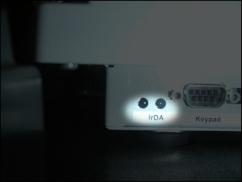
Why do Diebold's Touch-Screen Voting Machines Have Built-In Wireless Infrared Data Transfer Ports?
Bradblog - 2.22.06
[...] Now we have no idea what that "IrDA" port is meant to be used for with a touch-screen voting machine, but we do know that the IrDA (Infrared Data Association) is an Infrared port used for wireless connection between two devices. We used to have one on the back of our notebook and desktop computers which we used to keep the two systems synched up via wireless data transfers over that Infrared port.
A few election watchdog groups, including some members of the National Institute of Standards and Technology (NIST) who works with the federal authorities on these matters, have issued warnings about the IrDA port and protocols on voting machines. However, little -- if anything -- seems to have been done to mitigate the rather obvious security threat posed, as far as we can tell.
Read More >>
Former congressmen press changes in presidential elections
Chicago Tribune - Feb. 22, 2006
A coalition of former congressmen is launching a campaign to change how Americans select their president by reforming the Electoral College system, saying campaigns for the White House should be reliant on the nationwide popular vote rather than simply the outcome in a handful of swing states.
The bipartisan group plans to announce its proposal Thursday and begin a state-by-state effort to amend the Electoral College so the winner reflects the view of the country instead of an individual state or two with a close vote on Election Day. The plan would seek to eliminate the possibility of a candidate winning the popular vote but losing the election, as happened to former Vice President Al Gore in 2000.
"The time is long past to not play Electoral College roulette every four years," former Sen. Birch Bayh, D-Ind., said in an interview. "It is a throwback to 1887."
The plan, called the Campaign for the National Popular Vote, will be unveiled in Washington by Bayh; former Rep. John Anderson, R-Ill.; and other former members of Congress. The effort begins in Illinois, where legislation has been introduced in the General Assembly, followed by California and other states.
Even supporters, however, concede it's an uphill battle. Democrats may stand to gain more from enacting such reforms, considering candidates could increase their margins in heavily populated urban areas that typically favor their party. The reforms also could lend an advantage to independent candidates.
"The presidency becomes an irrelevant thing to two-thirds of the union," said Anderson, who was a congressman for 20 years and ran for president in 1980 as an independent. "All the people ought to decide, but now most states are tossed on the scrap heap and ignored" because Democratic or Republican candidates consistently win electoral votes in some states, thus effectively disenfranchising voters on the losing side in those states.
Previous attempts to change the Electoral College by amending the Constitution have failed in Congress, so proponents of reform are seeking to change laws through individual state legislatures. The initiative does not seek to abolish the Electoral College, but rather award the electors from each state to the candidate who wins the country's popular vote.
Read More >>
Chicago Tribune - Feb. 22, 2006
A coalition of former congressmen is launching a campaign to change how Americans select their president by reforming the Electoral College system, saying campaigns for the White House should be reliant on the nationwide popular vote rather than simply the outcome in a handful of swing states.
The bipartisan group plans to announce its proposal Thursday and begin a state-by-state effort to amend the Electoral College so the winner reflects the view of the country instead of an individual state or two with a close vote on Election Day. The plan would seek to eliminate the possibility of a candidate winning the popular vote but losing the election, as happened to former Vice President Al Gore in 2000.
"The time is long past to not play Electoral College roulette every four years," former Sen. Birch Bayh, D-Ind., said in an interview. "It is a throwback to 1887."
The plan, called the Campaign for the National Popular Vote, will be unveiled in Washington by Bayh; former Rep. John Anderson, R-Ill.; and other former members of Congress. The effort begins in Illinois, where legislation has been introduced in the General Assembly, followed by California and other states.
Even supporters, however, concede it's an uphill battle. Democrats may stand to gain more from enacting such reforms, considering candidates could increase their margins in heavily populated urban areas that typically favor their party. The reforms also could lend an advantage to independent candidates.
"The presidency becomes an irrelevant thing to two-thirds of the union," said Anderson, who was a congressman for 20 years and ran for president in 1980 as an independent. "All the people ought to decide, but now most states are tossed on the scrap heap and ignored" because Democratic or Republican candidates consistently win electoral votes in some states, thus effectively disenfranchising voters on the losing side in those states.
Previous attempts to change the Electoral College by amending the Constitution have failed in Congress, so proponents of reform are seeking to change laws through individual state legislatures. The initiative does not seek to abolish the Electoral College, but rather award the electors from each state to the candidate who wins the country's popular vote.
Read More >>
Man Pleads Not Guilty in Voting Device Case
LA Times - February 22 2006
A word processor accused of stealing damaging documents about electronic voting machine manufacturer Diebold Election Systems was arraigned Tuesday on three felony counts.
Stephen Heller was charged in Los Angeles Superior Court with felony access to computer data, commercial burglary and receiving stolen property. He pleaded not guilty.
"It's a devastating allegation for a whistle-blower," said Blair Berk, Heller's attorney. "Certainly, someone who saw those documents could have reasonably believed that thousands of voters were going to be potentially disenfranchised in upcoming elections."
The charges arise from Heller's alleged disclosure two years ago of legal papers from the Los Angeles office of international law firm Jones Day, which represented Diebold at the time. Heller was under contract as a word processor at Jones Day.
The documents included legal memos from one Jones Day attorney to another regarding allegations by activists that Diebold had used uncertified voting systems in Alameda County elections beginning in 2002.
In the memos, a Jones Day attorney opined that using uncertified voting systems violated California election law and that if Diebold had employed an uncertified system, Alameda County could sue the company for breaching its $12.7-million contract.
The documents also revealed that Diebold's attorneys were exploring whether the California secretary of state had the authority to investigate the company for alleged election law violations.
The Oakland Tribune published the legal memos on its website in April 2004. By then, the issue of whether Diebold used uncertified systems was already receiving widespread attention, because many of its systems failed during the March 2004 primary. As a result, poll workers had to turn away some early voters in San Diego County, and Alameda County voters had to use paper ballots.
A subsequent report by the secretary of state's office found that Diebold had marketed and sold its systems before gaining federal qualification and had installed uncertified software on election machines in 17 counties.
The company's AccuVote-TSx model was banned in May 2004, but Diebold machines were conditionally recertified by Secretary of State Bruce McPherson last week for use in 17 counties for this year's elections.
McPherson ordered Diebold to make long-term programming changes and submit the modifications to a federal panel for recertification.
The conditional recertification follows a turbulent history for Diebold's electronic voting systems.
In November 2004, the company settled a civil lawsuit brought by two activists and later joined by the state attorney general after he dropped his criminal investigation of the company.
Diebold paid $2.6 million to settle the suit, which alleged that the company had sold its touch-screen voting systems to Alameda County through misrepresentations about their security and certification.
One of the activists, Jim March, said he was the person who actually turned over the allegedly stolen documents to the Oakland Tribune and the state attorney general's and secretary of state's offices.
[...] Although state law protects whistle-blowers from retaliation by their employers, they can still be criminally prosecuted, said Tom Devine, legal director at the Washington, D.C.-based Government Accountability Project.
"It's very rare that it's successful," he said. "It's a tactic where the primary goal may be to scare other would-be whistle-blowers rather than a realistic attempt to obtain a conviction."
Heller's preliminary hearing date will be set at a trial conference April 24.
If convicted on all three counts, he could face up to three years and eight months in state prison, Gibbons said.
Link >>
LA Times - February 22 2006
A word processor accused of stealing damaging documents about electronic voting machine manufacturer Diebold Election Systems was arraigned Tuesday on three felony counts.
Stephen Heller was charged in Los Angeles Superior Court with felony access to computer data, commercial burglary and receiving stolen property. He pleaded not guilty.
"It's a devastating allegation for a whistle-blower," said Blair Berk, Heller's attorney. "Certainly, someone who saw those documents could have reasonably believed that thousands of voters were going to be potentially disenfranchised in upcoming elections."
The charges arise from Heller's alleged disclosure two years ago of legal papers from the Los Angeles office of international law firm Jones Day, which represented Diebold at the time. Heller was under contract as a word processor at Jones Day.
The documents included legal memos from one Jones Day attorney to another regarding allegations by activists that Diebold had used uncertified voting systems in Alameda County elections beginning in 2002.
In the memos, a Jones Day attorney opined that using uncertified voting systems violated California election law and that if Diebold had employed an uncertified system, Alameda County could sue the company for breaching its $12.7-million contract.
The documents also revealed that Diebold's attorneys were exploring whether the California secretary of state had the authority to investigate the company for alleged election law violations.
The Oakland Tribune published the legal memos on its website in April 2004. By then, the issue of whether Diebold used uncertified systems was already receiving widespread attention, because many of its systems failed during the March 2004 primary. As a result, poll workers had to turn away some early voters in San Diego County, and Alameda County voters had to use paper ballots.
A subsequent report by the secretary of state's office found that Diebold had marketed and sold its systems before gaining federal qualification and had installed uncertified software on election machines in 17 counties.
The company's AccuVote-TSx model was banned in May 2004, but Diebold machines were conditionally recertified by Secretary of State Bruce McPherson last week for use in 17 counties for this year's elections.
McPherson ordered Diebold to make long-term programming changes and submit the modifications to a federal panel for recertification.
The conditional recertification follows a turbulent history for Diebold's electronic voting systems.
In November 2004, the company settled a civil lawsuit brought by two activists and later joined by the state attorney general after he dropped his criminal investigation of the company.
Diebold paid $2.6 million to settle the suit, which alleged that the company had sold its touch-screen voting systems to Alameda County through misrepresentations about their security and certification.
One of the activists, Jim March, said he was the person who actually turned over the allegedly stolen documents to the Oakland Tribune and the state attorney general's and secretary of state's offices.
[...] Although state law protects whistle-blowers from retaliation by their employers, they can still be criminally prosecuted, said Tom Devine, legal director at the Washington, D.C.-based Government Accountability Project.
"It's very rare that it's successful," he said. "It's a tactic where the primary goal may be to scare other would-be whistle-blowers rather than a realistic attempt to obtain a conviction."
Heller's preliminary hearing date will be set at a trial conference April 24.
If convicted on all three counts, he could face up to three years and eight months in state prison, Gibbons said.
Link >>
21 February 2006
Mystery Pollster
Demystifying the Science and Art of Political Polling
Mark Blumenthal - 2.21.06
RoboScam: Not Your Father's Push Poll
The plot thickens. The automated calls we noted Friday received in the New York Congressional District of Republican Congressman John Sweeney (as reported by the Glen Falls, NY Post Star and the Albany Times Union) do not appear to be an isolated incident. Very similar calls have been received in Iowa and at least three other congressional districts held by Democrats that match the pattern of a classic "push poll" dirty trick. Why such calls were also made about a Republican remain unclear, but the answer may be a new high tech development in the inglorious history of political dirty tricks. Details will follow, but for now, let's call it "robo-scam."
Read More >>
Demystifying the Science and Art of Political Polling
Mark Blumenthal - 2.21.06
RoboScam: Not Your Father's Push Poll
The plot thickens. The automated calls we noted Friday received in the New York Congressional District of Republican Congressman John Sweeney (as reported by the Glen Falls, NY Post Star and the Albany Times Union) do not appear to be an isolated incident. Very similar calls have been received in Iowa and at least three other congressional districts held by Democrats that match the pattern of a classic "push poll" dirty trick. Why such calls were also made about a Republican remain unclear, but the answer may be a new high tech development in the inglorious history of political dirty tricks. Details will follow, but for now, let's call it "robo-scam."
Read More >>
Would Someone Please Interfere in Our Elections?
Paul Craig Roberts - February 21, 2006
[...] As the US has established the precedent for interfering in the internal affairs of other countries and uses organizations such as the International Republican Institute to buy electoral outcomes, how could Washington complain if some other country were to help the American people by financing an American political party that represents American values and civil liberties. It would be wonderful for America to have a party committed to diplomacy, peace, financial soundness, and the best interests of the American people, as opposed to a Jacobin ideology of death that represents the neoconservative agenda of the Bush regime.
To combat the Republican lock on electronic voting machines, the US is in desperate need of the UN to oversee our elections to prevent Republicans with low approval ratings from winning elections that exit polls show they lost.
The Bush regime is wasting huge borrowed sums at a time when job growth in America has collapsed, when tens of millions of Americans are losing their health care, their pensions, and their middle class status. America cannot afford such a moronic regime. Someone, somewhere please rescue us from the ignorant, tyrannical, and war criminal government that has seized America.
[Paul Craig Roberts was Assistant Secretary of the Treasury in the Reagan administration. He was Associate Editor of the Wall Street Journal editorial page and Contributing Editor of National Review.]
Read More >>
Paul Craig Roberts - February 21, 2006
[...] As the US has established the precedent for interfering in the internal affairs of other countries and uses organizations such as the International Republican Institute to buy electoral outcomes, how could Washington complain if some other country were to help the American people by financing an American political party that represents American values and civil liberties. It would be wonderful for America to have a party committed to diplomacy, peace, financial soundness, and the best interests of the American people, as opposed to a Jacobin ideology of death that represents the neoconservative agenda of the Bush regime.
To combat the Republican lock on electronic voting machines, the US is in desperate need of the UN to oversee our elections to prevent Republicans with low approval ratings from winning elections that exit polls show they lost.
The Bush regime is wasting huge borrowed sums at a time when job growth in America has collapsed, when tens of millions of Americans are losing their health care, their pensions, and their middle class status. America cannot afford such a moronic regime. Someone, somewhere please rescue us from the ignorant, tyrannical, and war criminal government that has seized America.
[Paul Craig Roberts was Assistant Secretary of the Treasury in the Reagan administration. He was Associate Editor of the Wall Street Journal editorial page and Contributing Editor of National Review.]
Read More >>
17 February 2006
Hackable Diebold Machines Covertly Re-Certified
in California by SOS
Bradblog - 2/17/2006
State Senator Outraged, Says Machines, Certification Violates State, Federal Standards and Law...
Secretary of State McPherson seems to have a thing for making major announcements late on Fridays just before holidays. Following in what seems to be a pattern of his, he announced late this afternoon that he was certifying Diebold Optical Scan and AccuVote TSx (touch-screens) for use in elections in the state.
The re-certification (they had been originally decertified in California in 2004 when it was revealed Diebold had installed illegal software updates on the machines) is conditional on some items but not on the one thing point he had announced last December when he sent the system back to federal authorities for further testing. At that time he said he was sending the machine's memory cards to the federal Independent Testing Authority (ITA) Lab for reinspection in light of the news out of Leon County, Florida that the cards used "intepreted code" which is specifically banned by the Help America Vote Act (HAVA). A "hack test" in that county revealed that an entire election could have its results flipped by a hacker exploiting that "interpreted code" -- without a trace being left behind.
McPherson made his announcement today without waiting to hear back from the ITA lab.
Last summer, after a massive mock election test with Diebold touch-screen machines revealed that 10% of them failed entirely with screens freezing and printers jamming -- later reports would reveal that as many as 30% of the machines actually failed! -- McPherson said, "We certainly can't take any kind of risk like that with this kind of device on California voters."
Read More >>
in California by SOS
Bradblog - 2/17/2006
State Senator Outraged, Says Machines, Certification Violates State, Federal Standards and Law...
Secretary of State McPherson seems to have a thing for making major announcements late on Fridays just before holidays. Following in what seems to be a pattern of his, he announced late this afternoon that he was certifying Diebold Optical Scan and AccuVote TSx (touch-screens) for use in elections in the state.
The re-certification (they had been originally decertified in California in 2004 when it was revealed Diebold had installed illegal software updates on the machines) is conditional on some items but not on the one thing point he had announced last December when he sent the system back to federal authorities for further testing. At that time he said he was sending the machine's memory cards to the federal Independent Testing Authority (ITA) Lab for reinspection in light of the news out of Leon County, Florida that the cards used "intepreted code" which is specifically banned by the Help America Vote Act (HAVA). A "hack test" in that county revealed that an entire election could have its results flipped by a hacker exploiting that "interpreted code" -- without a trace being left behind.
McPherson made his announcement today without waiting to hear back from the ITA lab.
Last summer, after a massive mock election test with Diebold touch-screen machines revealed that 10% of them failed entirely with screens freezing and printers jamming -- later reports would reveal that as many as 30% of the machines actually failed! -- McPherson said, "We certainly can't take any kind of risk like that with this kind of device on California voters."
Read More >>
Maryland's Republican Governor
Issues Devastating Blow to Diebold
Calls for Paper Ballots, Decries Lack of Security, 1000% Increase in Maintenance Cost for Diebold Voting System!
Bradblog - 2/16/2006
In the letter sent by Maryland's Republican governor Robert L. Ehrlich, Jr. to the State Board of Elections on Wednesday, he declares that he "no longer [has] confidence in the State Board of Elections’ ability to conduct fair and accurate elections in 2006."
Citing the "widespread national concern about the reliability and security of electronic voting systems," the decertification and denial of certification of Diebold around the country, and the need to "get aggressive in responding to citizens' concerns over public confidence in the elections system," Ehrlich says it's time to demand paper ballots once again in the State of Maryland.
"It is my personal belief," writes Ehrlich in a letter to BoE Chairman, Gilles Burger, "that the voters of Maryland should be allowed to vote a paper ballot or have a voter verification paper-trail to electronic voting as reassurance to voters that their votes are being accurately cast."
In his excoriating letter to Burger, the Governor goes on to cite the 78% increase in base cost for the system over original estimates and the -- sit down for this -- "1000% increase for estimates of the annual maintenance costs for this system."
"The cost of Maryland’s Diebold voting machines has skyrocketed as our confidence in the system has plummeted," wrote the Governor.
Finally, the letter concludes with a brutal condemnation of the MD Elections Administrator, Linda Lamone, charging that her work and that of her staff, has been "primarily on behalf of partisan legislators and their interests and not on the interests of the citizens of Maryland."
Lamone, who is currently President of the National Association of State Elections Directors (NASED) has been a champion of Diebold's paperless touch-screen machines in the state. She recently testified to the state Senate that there was not enough time or money to add "voter-vefied paper trails" to Maryland's touch-screen machines prior to the 2006 election. As well, she has maintained for years that the system is safe, reliable and secure. Those claims are not well-founded.
An internal review by the state Elections Board after the 2004 election titled "Lessons Learned" reveals that "189 voting units (7%) of units deployed failed on Election Day. An additional 122 voting units (or 5%) were suspect based on number of votes captured."
Those documented failures, of course, are just the ones we know about. In Leon County, Florida, when Diebold machines were hacked last December, it was done without a trace being left behind.
Washington Post's Thursday coverage of Ehrlich's letter quotes him as telling reporters, "Maryland is not prepared to conduct an election."
Read More >>
Issues Devastating Blow to Diebold
Calls for Paper Ballots, Decries Lack of Security, 1000% Increase in Maintenance Cost for Diebold Voting System!
Bradblog - 2/16/2006
In the letter sent by Maryland's Republican governor Robert L. Ehrlich, Jr. to the State Board of Elections on Wednesday, he declares that he "no longer [has] confidence in the State Board of Elections’ ability to conduct fair and accurate elections in 2006."
Citing the "widespread national concern about the reliability and security of electronic voting systems," the decertification and denial of certification of Diebold around the country, and the need to "get aggressive in responding to citizens' concerns over public confidence in the elections system," Ehrlich says it's time to demand paper ballots once again in the State of Maryland.
"It is my personal belief," writes Ehrlich in a letter to BoE Chairman, Gilles Burger, "that the voters of Maryland should be allowed to vote a paper ballot or have a voter verification paper-trail to electronic voting as reassurance to voters that their votes are being accurately cast."
In his excoriating letter to Burger, the Governor goes on to cite the 78% increase in base cost for the system over original estimates and the -- sit down for this -- "1000% increase for estimates of the annual maintenance costs for this system."
"The cost of Maryland’s Diebold voting machines has skyrocketed as our confidence in the system has plummeted," wrote the Governor.
Finally, the letter concludes with a brutal condemnation of the MD Elections Administrator, Linda Lamone, charging that her work and that of her staff, has been "primarily on behalf of partisan legislators and their interests and not on the interests of the citizens of Maryland."
Lamone, who is currently President of the National Association of State Elections Directors (NASED) has been a champion of Diebold's paperless touch-screen machines in the state. She recently testified to the state Senate that there was not enough time or money to add "voter-vefied paper trails" to Maryland's touch-screen machines prior to the 2006 election. As well, she has maintained for years that the system is safe, reliable and secure. Those claims are not well-founded.
An internal review by the state Elections Board after the 2004 election titled "Lessons Learned" reveals that "189 voting units (7%) of units deployed failed on Election Day. An additional 122 voting units (or 5%) were suspect based on number of votes captured."
Those documented failures, of course, are just the ones we know about. In Leon County, Florida, when Diebold machines were hacked last December, it was done without a trace being left behind.
Washington Post's Thursday coverage of Ehrlich's letter quotes him as telling reporters, "Maryland is not prepared to conduct an election."
Read More >>
16 February 2006
Statisticians Recommend New Measures to Ensure Vote Count Accuracy and Release 'Ohio’s 2004 Exit Poll Analysis for Novices'
PRWeb - Feb 16, 2006
Why should Americans care about possible 2004 vote miscounts? The 2004 election is over. It’s old news. The only reason for rehashing prior elections is to ensure that our votes are counted the way voters intend in the future. Should Americans trust that our votes are counted accurately; or is wholesale electronic election tampering occurring? How could the evidence of vote tampering be hidden? Is the future of democracy and U.S. elections at stake? The U.S. press has dismissed exit polls as surprisingly inaccurate in the 2004 presidential election when exit polls conflicted with official vote counts. Were Exit Polls Wrong or Vote Counts Altered?
On February 14, 2006, the National Election Data Archive, a group of volunteer mathematicians, released a report asking that new measures be taken immediately in order to assure the integrity of future U.S. election results. Their new report discusses why current measures to ensure vote count accuracy, such as testing and certification, are inadequate; discusses how evidence of vote miscounts are hidden by current election reporting procedures; and recommends independent vote count audits, public detailed election data monitoring, and public exit poll data.
The National Election Data Archive’s report also summarizes a scientific analysis of Ohio’s precinct-level exit polls in layman’s terms. Why should Americans care about Ohio’s 2004 vote counts? Ohio was a key battleground state. Whichever presidential candidate won Ohio became president. Ohio is also the only state for which pollsters publicly released sufficient precinct-level exit poll and vote count data to perform a valid mathematical analysis. Exit polls by the same exit polling firm, Edison/Mitofsky International, were recently used to judge when elections in the Ukraine and Azerbaijan were valid. Exit polls in the 2004 presidential election were not just randomly inaccurate: Bush's reported vote tally was higher than the exit polls anticipated and the inaccuracy was highest in precincts with the highest reported Bush vote. The pollsters said: “Bush voters completed fewer exit polls.” However, the National Election Archive’s analysis finds that the exit poll error explanation is inconsistent with the data and claim that John Kerry might be president today, if votes had been accurately counted in Ohio.
In June 2005 The Election Science Institute (ESI) and pollster Mitofsky issued a paper “Ohio 2004 Exit Polls: Explaining the Discrepancy” which asserts that an exit poll error explanation “is much more likely than the fraud accusation theory to account for most, if not all, of the observed discrepancy between the exit polls and the actual results.” Precinct-level exit poll data released with ESI’s report shows that the overall average discrepancy between Ohio’s exit poll and certified vote count margins between Kerry and Bush was 11.7 percentage points.
However, In October, 2005, the National Election Archive released a paper which gives counterexamples to show that the Election Science Institute’s analysis was based on an invalid premise. On January 17, 2006 the National Election Archive released its own scientific Ohio exit poll discrepancy analysis, “The Gun Is Smoking: 2004 Ohio Precinct-level Exit Poll Data Show Virtually Irrefutable Evidence of Vote Miscount”. This analysis concluded that Ohio’s huge exit poll discrepancy pattern is consistent with outcome-altering errors in vote counts.
Two things are certain in this controversy about U.S. exit poll accuracy:
1. The Election Science Institute and the National Election Archive cannot both be correct, and
2. Any university mathematics department in America could evaluate the two conflicting studies and decide which analysis is mathematically correct.
The National Election Archive challenges every journalist interested in discovering if outcome-altering vote miscounts or exit poll error is the more probable cause of Ohio’s exit poll discrepancy; to help resolve this critical question. The answer may make the difference as to whether Americans take steps to ensure vote count accuracy in future elections or not. The National Election Archive urges the National Election Pool media consortium to accept this “math challenge” by sharing these two conflicting election studies with mathematics faculty at any university to determine which analysis is mathematically correct. [Link] [Link] [Link]
The survival of democracy and the future of our civilization may depend on taking steps to ensure the accuracy of elections. As the Election Science Institute said, “The public has a right to know exactly how elections work and to verify for themselves that the voting and the counting is done right.”
The full report is available online HERE
Read More >>
PRWeb - Feb 16, 2006
Why should Americans care about possible 2004 vote miscounts? The 2004 election is over. It’s old news. The only reason for rehashing prior elections is to ensure that our votes are counted the way voters intend in the future. Should Americans trust that our votes are counted accurately; or is wholesale electronic election tampering occurring? How could the evidence of vote tampering be hidden? Is the future of democracy and U.S. elections at stake? The U.S. press has dismissed exit polls as surprisingly inaccurate in the 2004 presidential election when exit polls conflicted with official vote counts. Were Exit Polls Wrong or Vote Counts Altered?
On February 14, 2006, the National Election Data Archive, a group of volunteer mathematicians, released a report asking that new measures be taken immediately in order to assure the integrity of future U.S. election results. Their new report discusses why current measures to ensure vote count accuracy, such as testing and certification, are inadequate; discusses how evidence of vote miscounts are hidden by current election reporting procedures; and recommends independent vote count audits, public detailed election data monitoring, and public exit poll data.
The National Election Data Archive’s report also summarizes a scientific analysis of Ohio’s precinct-level exit polls in layman’s terms. Why should Americans care about Ohio’s 2004 vote counts? Ohio was a key battleground state. Whichever presidential candidate won Ohio became president. Ohio is also the only state for which pollsters publicly released sufficient precinct-level exit poll and vote count data to perform a valid mathematical analysis. Exit polls by the same exit polling firm, Edison/Mitofsky International, were recently used to judge when elections in the Ukraine and Azerbaijan were valid. Exit polls in the 2004 presidential election were not just randomly inaccurate: Bush's reported vote tally was higher than the exit polls anticipated and the inaccuracy was highest in precincts with the highest reported Bush vote. The pollsters said: “Bush voters completed fewer exit polls.” However, the National Election Archive’s analysis finds that the exit poll error explanation is inconsistent with the data and claim that John Kerry might be president today, if votes had been accurately counted in Ohio.
In June 2005 The Election Science Institute (ESI) and pollster Mitofsky issued a paper “Ohio 2004 Exit Polls: Explaining the Discrepancy” which asserts that an exit poll error explanation “is much more likely than the fraud accusation theory to account for most, if not all, of the observed discrepancy between the exit polls and the actual results.” Precinct-level exit poll data released with ESI’s report shows that the overall average discrepancy between Ohio’s exit poll and certified vote count margins between Kerry and Bush was 11.7 percentage points.
However, In October, 2005, the National Election Archive released a paper which gives counterexamples to show that the Election Science Institute’s analysis was based on an invalid premise. On January 17, 2006 the National Election Archive released its own scientific Ohio exit poll discrepancy analysis, “The Gun Is Smoking: 2004 Ohio Precinct-level Exit Poll Data Show Virtually Irrefutable Evidence of Vote Miscount”. This analysis concluded that Ohio’s huge exit poll discrepancy pattern is consistent with outcome-altering errors in vote counts.
Two things are certain in this controversy about U.S. exit poll accuracy:
1. The Election Science Institute and the National Election Archive cannot both be correct, and
2. Any university mathematics department in America could evaluate the two conflicting studies and decide which analysis is mathematically correct.
The National Election Archive challenges every journalist interested in discovering if outcome-altering vote miscounts or exit poll error is the more probable cause of Ohio’s exit poll discrepancy; to help resolve this critical question. The answer may make the difference as to whether Americans take steps to ensure vote count accuracy in future elections or not. The National Election Archive urges the National Election Pool media consortium to accept this “math challenge” by sharing these two conflicting election studies with mathematics faculty at any university to determine which analysis is mathematically correct. [Link] [Link] [Link]
The survival of democracy and the future of our civilization may depend on taking steps to ensure the accuracy of elections. As the Election Science Institute said, “The public has a right to know exactly how elections work and to verify for themselves that the voting and the counting is done right.”
The full report is available online HERE
Read More >>
Documents show Maryland held election, primary
on uncertified, illegal Diebold voting machines
RawStory - 02/16/2006
The Maryland State Board of Elections allowed Diebold Election Systems to operate its touch-screen voting machines during the state's 2002 gubernatorial election and the 2004 presidential primaries before the state agency actually certified the controversial machines, according to recently disclosed documents.
That is a violation of state law, according to Linda Schade, executive director of TrueVoteMD.org, an election integrity group.
Schade discovered the document among thousands of others she recently acquired through a lawsuit filed against the Maryland State Board of Elections in 2004. After almost two years of public records requests and attorney wrangling, she received four boxes filled with e-mail conversations, faxes and contracts between the elections office and Diebold.
[...] Upsets and unusual outcomes
In November 2002, Lamone, a Democrat, allowed Diebold to operate its machines in four counties for the state gubernatorial election. That was when Ehrlich became the first Republican governor to be elected in 36 years in what had always been known as a solidly Democratic state.
That was also the year when a Republican political newcomer, a self-described "nobody," ousted a veteran Democratic state senator in what The Baltimore Sun described as "one of the most remarkable election upsets in recent Maryland political history."
After serving for several decades, Democratic House Speaker Casper R. Taylor Jr. lost his Allegany County seat to LeRoy E. Myers. Allegany County was one of the four counties where Diebold machines were used that year.
In March 2004, during the presidential primary elections, Maryland became one of only two states in the country to use Diebold voting machines throughout the entire state. A month later, Schade filed her lawsuit in an attempt to prevent Diebold from running the upcoming November 2004 presidential elections, accusing Lamone in the suit of "recklessly certifying" the machines for the primary elections.
But at the time, Schade had no idea that Lamone had not even bothered certifying the machines. In fact, the machines did not get certified until the following month. The machines were finally certified May 20, 2004.
Though now certified, machines still may not meet FEC standards
[...] An easily altered paper trail
The Diebold voting machines used in Maryland since 2002 use a common PCMCIA card, which record the numbers of votes cast on that particular machine during an election. When the polls close, election workers are suppose to print out results from each machine before shipping the PCMCIA card to a the main elections office.
Just last month, computer expert Harri Hursti showed Florida election officials in Leon County how easily these cards can be manipulated in a study now known as the "Hursti Hack."
"What Harri discovered was that using a laptop and a PCMCIA card reader, which you can buy on the Internet, he could change the contents of the card," Jones said. "He could reprogram the card to print anything he wanted and it only took seconds."
The contents on the card, which are shipped off to the main elections office, remain unchanged, but the printout, the only paper trail produced by the machines, end up altered, he said.
"And the paper trail is what most people would look at to verify an election," he said.
Read More >>
on uncertified, illegal Diebold voting machines
RawStory - 02/16/2006
The Maryland State Board of Elections allowed Diebold Election Systems to operate its touch-screen voting machines during the state's 2002 gubernatorial election and the 2004 presidential primaries before the state agency actually certified the controversial machines, according to recently disclosed documents.
That is a violation of state law, according to Linda Schade, executive director of TrueVoteMD.org, an election integrity group.
Schade discovered the document among thousands of others she recently acquired through a lawsuit filed against the Maryland State Board of Elections in 2004. After almost two years of public records requests and attorney wrangling, she received four boxes filled with e-mail conversations, faxes and contracts between the elections office and Diebold.
[...] Upsets and unusual outcomes
In November 2002, Lamone, a Democrat, allowed Diebold to operate its machines in four counties for the state gubernatorial election. That was when Ehrlich became the first Republican governor to be elected in 36 years in what had always been known as a solidly Democratic state.
That was also the year when a Republican political newcomer, a self-described "nobody," ousted a veteran Democratic state senator in what The Baltimore Sun described as "one of the most remarkable election upsets in recent Maryland political history."
After serving for several decades, Democratic House Speaker Casper R. Taylor Jr. lost his Allegany County seat to LeRoy E. Myers. Allegany County was one of the four counties where Diebold machines were used that year.
In March 2004, during the presidential primary elections, Maryland became one of only two states in the country to use Diebold voting machines throughout the entire state. A month later, Schade filed her lawsuit in an attempt to prevent Diebold from running the upcoming November 2004 presidential elections, accusing Lamone in the suit of "recklessly certifying" the machines for the primary elections.
But at the time, Schade had no idea that Lamone had not even bothered certifying the machines. In fact, the machines did not get certified until the following month. The machines were finally certified May 20, 2004.
Though now certified, machines still may not meet FEC standards
[...] An easily altered paper trail
The Diebold voting machines used in Maryland since 2002 use a common PCMCIA card, which record the numbers of votes cast on that particular machine during an election. When the polls close, election workers are suppose to print out results from each machine before shipping the PCMCIA card to a the main elections office.
Just last month, computer expert Harri Hursti showed Florida election officials in Leon County how easily these cards can be manipulated in a study now known as the "Hursti Hack."
"What Harri discovered was that using a laptop and a PCMCIA card reader, which you can buy on the Internet, he could change the contents of the card," Jones said. "He could reprogram the card to print anything he wanted and it only took seconds."
The contents on the card, which are shipped off to the main elections office, remain unchanged, but the printout, the only paper trail produced by the machines, end up altered, he said.
"And the paper trail is what most people would look at to verify an election," he said.
Read More >>
15 February 2006
 Excerpt: How to Steal an Election
Americans cling to an idealized image of our political integrity, but a look at how we run our elections tells a very different tale.
Andrew Gumbel, AlterNet
February 15, 2006
A few days before the November 2004 election, Jimmy Carter was asked what would happen if, instead of flying to Zambia or Venezuela or East Timor, his widely respected international election monitoring team was invited to turn its attention to the United States. His answer was stunningly blunt. Not only would the voting system be regarded as a failure, he said, but the shortcomings were so egregious the Carter Center would never agree to monitor an election there in the first place. "We wouldn't think of it," the former president told a radio interviewer. "The American political system wouldn't measure up to any sort of international standards, for several reasons."
What, after all, was to be done with a country whose newest voting machines, unlike Venezuela's, couldn't even perform recounts? A country where candidates, in contrast to the more promising emerging democracies of the Caucasus or the Balkans, were denied equal, unpaid access to the media? There were a number of reasons, in the sharply partisan atmosphere surrounding the Bush-Kerry race, to wonder whether campaign conditions didn't smack more of the Third World than the First. Every day, newspapers recounted stories of registration forms being found in garbage cans, or of voter rolls padded with the names of noncitizens, fictional characters, household pets, and the dearly departed. The Chicago Tribune, a paper that knows its voter fraud, having won a Pulitzer for its work on the infamous Daley machine, found 181,000 dead people on the registration lists of six key battleground states.
[...] It all seemed so strange. Until the Florida meltdown of 2000, conventional wisdom would have had us believe the machinery of American democracy ran smoothly and peacefully, that victors played fair, and that the vanquished conceded graciously. Now, seemingly out of nowhere, it was open season for frauds, manipulators, corrupt election officials, dishonest voting machine manufacturers, bully-boy winners, and paranoid sore losers. Where did they come from so suddenly?
Read More >>
09 February 2006
Constitutionality of All Electronic Voting Machines
in New Jersey Now in Question!
Bradblog - 2/9/2006
Appellate Court Reinstates Lawsuit Challenging Ability of E-Vote Machines to Count Votes Accurately and in Accordance with Both the State Constitution and Election Law
Suit May Have Far-Reaching Implications for Other States...
In a just released press release the Constitutional Litigation Clinic at Rutgers School of Law in Newark, NJ has announced that all electronic voting machines used in New Jersey may violate New Jersey's Constitution and election laws.
[...] This lawsuit could have an impact on lawsuits in other states. Paul Lehto, who is a complainant in a suit against Sequoia in Washington state because using secret software to count votes secretly is contrary to the Washington state Constitution, is very interested in the opinion in this case.
Read More >>
in New Jersey Now in Question!
Bradblog - 2/9/2006
Appellate Court Reinstates Lawsuit Challenging Ability of E-Vote Machines to Count Votes Accurately and in Accordance with Both the State Constitution and Election Law
Suit May Have Far-Reaching Implications for Other States...
In a just released press release the Constitutional Litigation Clinic at Rutgers School of Law in Newark, NJ has announced that all electronic voting machines used in New Jersey may violate New Jersey's Constitution and election laws.
[...] This lawsuit could have an impact on lawsuits in other states. Paul Lehto, who is a complainant in a suit against Sequoia in Washington state because using secret software to count votes secretly is contrary to the Washington state Constitution, is very interested in the opinion in this case.
Read More >>
08 February 2006
Diebold May Be Getting Out of Election Business,
According to Updated AP Story...
Bradblog - 2/8/2006
As we pointed out in our story on Diebold yesterday, AP ran a short piece including an interview with new CEO Tom Swidarski revealing indications that he seems to be looking to unload the beleaguered Diebold Elections Division as part of his $100 million "restructuring plan" as recently promised to share holders.
Shortly after our post about that article, AP reissued the same article, but with an additional quote from Swidarski, a bit more background on Diebold's many woes (former CEO Walden O'Dell's promise to deliver the state of Ohio to Bush, etc.) and a new headline: "Diebold chief says fate of e-voting unit under review".
[...] Feel free to contact your local Board of Election or Secretary of State who is considering signing a contract with these guys and let them know that Diebold may well not even be there a few months from now!
Read More >>
According to Updated AP Story...
Bradblog - 2/8/2006
As we pointed out in our story on Diebold yesterday, AP ran a short piece including an interview with new CEO Tom Swidarski revealing indications that he seems to be looking to unload the beleaguered Diebold Elections Division as part of his $100 million "restructuring plan" as recently promised to share holders.
Shortly after our post about that article, AP reissued the same article, but with an additional quote from Swidarski, a bit more background on Diebold's many woes (former CEO Walden O'Dell's promise to deliver the state of Ohio to Bush, etc.) and a new headline: "Diebold chief says fate of e-voting unit under review".
[...] Feel free to contact your local Board of Election or Secretary of State who is considering signing a contract with these guys and let them know that Diebold may well not even be there a few months from now!
Read More >>
07 February 2006
Democracy for America
Petition for Clean Elections
The survival of our democracy demands that every vote be counted accurately. That's why Democracy for America members around the country are working with Congress and other organizations every day to ensure the integrity of your vote. We have made some progress. But this is crunch time. The mid-term elections are just eight months away. We must act now to ensure that our voting systems produce accurate and verifiable results every single time.
Unfortunately, the Republican leadership in Congress has resisted every call for real reform. Well, we can't wait any longer for Washington to act. The way to protect our elections is to go right to the source by reaching out to town and county election officials. In most areas, these officials have the power to ensure fair and accurate voting systems even if our federal government won't act.
Today, we call on our county election officials to demonstrate that their systems use paper-ballots that allow a) voters to verify their choices; and b) officials to conduct meaningful audits and recounts.
Paper-ballot voting is the gold standard because it is the only way to ensure an auditable paper trail. Both the non-partisan Government Accountability Office and the bi-partisan Carter/Baker Commission have resoundingly condemned touchscreen electronic voting systems as lacking even the most basic security and reliability. In one test after another, electronic voting systems are failing at rates of 30% or higher.
It's time to let our local election officials hear from us. We can use the grassroots network we've built to bring real voting reform to our country. And we'll do it our way: from the bottom up, one county at a time.
Sign the call for accountability:
After you sign the petition, Democracy for America staff will work with you and thousands of others around the country to make sure your voice is heard by delivering your signature to your local election officials.
Casting a vote is the most fundamental action we take as citizens. But unless we act now, that fundamental right may be undermined by failing technology, and unaccountable election officials. It is our responsibility to ensure that -- in 2006 -- every vote is counted accurately.
Sincerely,
Tom Hughes
Executive Director
Democracy for America
democracyforamerica.com/voting
Petition for Clean Elections
The survival of our democracy demands that every vote be counted accurately. That's why Democracy for America members around the country are working with Congress and other organizations every day to ensure the integrity of your vote. We have made some progress. But this is crunch time. The mid-term elections are just eight months away. We must act now to ensure that our voting systems produce accurate and verifiable results every single time.
Unfortunately, the Republican leadership in Congress has resisted every call for real reform. Well, we can't wait any longer for Washington to act. The way to protect our elections is to go right to the source by reaching out to town and county election officials. In most areas, these officials have the power to ensure fair and accurate voting systems even if our federal government won't act.
Today, we call on our county election officials to demonstrate that their systems use paper-ballots that allow a) voters to verify their choices; and b) officials to conduct meaningful audits and recounts.
Paper-ballot voting is the gold standard because it is the only way to ensure an auditable paper trail. Both the non-partisan Government Accountability Office and the bi-partisan Carter/Baker Commission have resoundingly condemned touchscreen electronic voting systems as lacking even the most basic security and reliability. In one test after another, electronic voting systems are failing at rates of 30% or higher.
It's time to let our local election officials hear from us. We can use the grassroots network we've built to bring real voting reform to our country. And we'll do it our way: from the bottom up, one county at a time.
Sign the call for accountability:
After you sign the petition, Democracy for America staff will work with you and thousands of others around the country to make sure your voice is heard by delivering your signature to your local election officials.
Casting a vote is the most fundamental action we take as citizens. But unless we act now, that fundamental right may be undermined by failing technology, and unaccountable election officials. It is our responsibility to ensure that -- in 2006 -- every vote is counted accurately.
Sincerely,
Tom Hughes
Executive Director
Democracy for America
democracyforamerica.com/voting
Way clear for voting machines
Pittsburgh Tribune-Review - Feb 7, 2006
An Allegheny County judge rejected a request Monday from a group of voters seeking to bar the county from buying new voting machines.
[...] The voters group, led by Richard King, 49, of Squirrel Hill, filed suit Jan. 31 asking a judge to bar the county from buying machines. The suit, which King argued himself despite not being a lawyer, alleged that Pennsylvania law requires counties to hold a voter referendum when they want to change the type of voting machines they use.
But Allegheny County Common Pleas Court President Judge Joseph James rejected the request for an injunction, finding that the county has not yet signaled its intention to act. "I do not believe the county is at the precipice of entering into a contract," he said.
[...] Allegheny County's three-member elections board twice has postponed deciding which company would supply about 5,700 new voting machines to replace the lever systems the county has used since the 1960s. The county faces a deadline today to accept terms from the one supplier that county officials say is capable of filling the order by the May 16 primary as required by law.
[...] But voting rights activists, including King, fear the county is not considering machines that provide voters a verifiable paper trial showing whom they voted for and proving their ballots were cast.
National controversy about Diebold has led one of three election board members to say he can't vote in favor of the company.
County Councilman John DeFazio, D-Shaler, said he has heard too much about problems with Diebold's machines, and allegations about a former company head's favoritism toward Republicans. "I feel that we should go with somebody other than Diebold from everything you hear, read and see in the paper," he said.
Read More >>
Pittsburgh Tribune-Review - Feb 7, 2006
An Allegheny County judge rejected a request Monday from a group of voters seeking to bar the county from buying new voting machines.
[...] The voters group, led by Richard King, 49, of Squirrel Hill, filed suit Jan. 31 asking a judge to bar the county from buying machines. The suit, which King argued himself despite not being a lawyer, alleged that Pennsylvania law requires counties to hold a voter referendum when they want to change the type of voting machines they use.
But Allegheny County Common Pleas Court President Judge Joseph James rejected the request for an injunction, finding that the county has not yet signaled its intention to act. "I do not believe the county is at the precipice of entering into a contract," he said.
[...] Allegheny County's three-member elections board twice has postponed deciding which company would supply about 5,700 new voting machines to replace the lever systems the county has used since the 1960s. The county faces a deadline today to accept terms from the one supplier that county officials say is capable of filling the order by the May 16 primary as required by law.
[...] But voting rights activists, including King, fear the county is not considering machines that provide voters a verifiable paper trial showing whom they voted for and proving their ballots were cast.
National controversy about Diebold has led one of three election board members to say he can't vote in favor of the company.
County Councilman John DeFazio, D-Shaler, said he has heard too much about problems with Diebold's machines, and allegations about a former company head's favoritism toward Republicans. "I feel that we should go with somebody other than Diebold from everything you hear, read and see in the paper," he said.
Read More >>
06 February 2006
Revote in Ohio After More Votes Than Voters
Recorded on Diebold Touch-Screen Voting Machines!
Court Orders Special Re-Vote Tomorrow After 'Failure' of Montgomery County, OH's New AccuVote TSX Machines!
County one of forty-four to implement new touch-screen machines for last November's election resulting in inexplicable results...
Bradblog - 2/6/2006
Diebold Inc., one of America's largest voting machine companies, likes to claim that there's never been any substantial problem with their touch-screen machines in any election in America.
You may not be surprised to hear that claim is patently untrue.
As reported in yesterday's Middletown Journal, a special "re-vote" will be held tomorrow in Montgomery county, OH on an issue where last November's election results were set aside due to more votes being cast on Diebold's AccuVote TSX touch-screen voting machines than there were actually registered voters who voted!
[...] Montgomery County is one of 41 counties in Ohio to have added new Diebold AccuVote TSX touch-screen (DRE) voting machines for last November's election.
In that election, remarkable and virtually inexplicable results occurred across the state in regard to four Election Reform initiatives on the ballot, all of which were predicted to pass by large margins in a historically accurate poll released just prior to Election Day. We wrote about the "staggeringly impossible" results of that election back in November. Those results have still not been explained, despite 44 of 88 counties in the Buckeye State using all-new touch-screen voting machines for the first time in that election.
Read More >>
Recorded on Diebold Touch-Screen Voting Machines!
Court Orders Special Re-Vote Tomorrow After 'Failure' of Montgomery County, OH's New AccuVote TSX Machines!
County one of forty-four to implement new touch-screen machines for last November's election resulting in inexplicable results...
Bradblog - 2/6/2006
Diebold Inc., one of America's largest voting machine companies, likes to claim that there's never been any substantial problem with their touch-screen machines in any election in America.
You may not be surprised to hear that claim is patently untrue.
As reported in yesterday's Middletown Journal, a special "re-vote" will be held tomorrow in Montgomery county, OH on an issue where last November's election results were set aside due to more votes being cast on Diebold's AccuVote TSX touch-screen voting machines than there were actually registered voters who voted!
[...] Montgomery County is one of 41 counties in Ohio to have added new Diebold AccuVote TSX touch-screen (DRE) voting machines for last November's election.
In that election, remarkable and virtually inexplicable results occurred across the state in regard to four Election Reform initiatives on the ballot, all of which were predicted to pass by large margins in a historically accurate poll released just prior to Election Day. We wrote about the "staggeringly impossible" results of that election back in November. Those results have still not been explained, despite 44 of 88 counties in the Buckeye State using all-new touch-screen voting machines for the first time in that election.
Read More >>
Mark Crispin Miller Connects the Dots on Election Problems
Buzzflash Interview
"That refusal to confront the evidence, and to concede that Bush & Co. were not elected, is certainly not based on reason. It’s based, rather, on deep denial and fearful ideology. It’s based on the absurd conviction that it can’t happen here. But ... our whole system of government is based on the assumption that it can happen anywhere, at any time—that it can happen here, and surely will unless we keep this system going with all its checks and balances. The Framers studied history, and saw “it” happening repeatedly, wherever power was concentrated in one person or one body or one mob. That’s why they designed the system as they did."
Part One >>
Part Two >>
Buzzflash Interview
"That refusal to confront the evidence, and to concede that Bush & Co. were not elected, is certainly not based on reason. It’s based, rather, on deep denial and fearful ideology. It’s based on the absurd conviction that it can’t happen here. But ... our whole system of government is based on the assumption that it can happen anywhere, at any time—that it can happen here, and surely will unless we keep this system going with all its checks and balances. The Framers studied history, and saw “it” happening repeatedly, wherever power was concentrated in one person or one body or one mob. That’s why they designed the system as they did."
Part One >>
Part Two >>
05 February 2006
Election officials fear '06 season of the glitch
By Jim Drinkard, USA TODAY
WASHINGTON — More than 30 million Americans will be looking at new and unfamiliar voting machines when they cast their ballots this year, perhaps the most rapid changeover of voting equipment in history. With that change comes an increased risk of errors and confusion, election officials say.
"When you look at disaster stories, it is usually that first time using a new piece of equipment that something is going to fall apart," says Kimball Brace, president of Election Data Services, which maintains data on voting systems across the country.
Brace's latest update, to be released today, shows that at least 647 of the nation's 3,114 counties will be using new voting machines this year, more than at any time since records began in 1980 and probably ever, he said. Those jurisdictions are home to 30.6 million registered voters, or almost a fifth of the national total.
[...] Linda Lamone, administrator of the Maryland Board of Elections and president of the National Association of State Election Directors, says widespread worries about glitches include:
•Is there enough time to educate voters and poll workers, many of them older and not proficient with computers, before Election Day?
•Will there be adequate tech support from voting-machine manufacturers?
•How will the 25 states that require a paper backup for their computerized machines handle that — and which record will be the official one for any recount?
"Election officials are worried," Brace says. "A lot of them are saying, 'Why didn't I retire last year?' "
Read More >>
By Jim Drinkard, USA TODAY
WASHINGTON — More than 30 million Americans will be looking at new and unfamiliar voting machines when they cast their ballots this year, perhaps the most rapid changeover of voting equipment in history. With that change comes an increased risk of errors and confusion, election officials say.
"When you look at disaster stories, it is usually that first time using a new piece of equipment that something is going to fall apart," says Kimball Brace, president of Election Data Services, which maintains data on voting systems across the country.
Brace's latest update, to be released today, shows that at least 647 of the nation's 3,114 counties will be using new voting machines this year, more than at any time since records began in 1980 and probably ever, he said. Those jurisdictions are home to 30.6 million registered voters, or almost a fifth of the national total.
[...] Linda Lamone, administrator of the Maryland Board of Elections and president of the National Association of State Election Directors, says widespread worries about glitches include:
•Is there enough time to educate voters and poll workers, many of them older and not proficient with computers, before Election Day?
•Will there be adequate tech support from voting-machine manufacturers?
•How will the 25 states that require a paper backup for their computerized machines handle that — and which record will be the official one for any recount?
"Election officials are worried," Brace says. "A lot of them are saying, 'Why didn't I retire last year?' "
Read More >>
03 February 2006
GOP Felon Who Jammed Democratic Get Out the Vote Phones on Election Day Says He Was Acting at the Behest of the State and Federal Parties
Talking Points Memo via Buzzflash
Interesting. Allen Raymond, one of the guys at the center of the New Hampshire phone-jamming case, was sentenced today up in New Hampshire.
In court, his lawyer, John Durkin, said that when Raymond was executing the election tampering plot he "was acting at the behest of the state and federal Republican parties (italics included)."
The call came from the campaign committee run by Sen. Bill Frist (R-TN). Jim Tobin, who's now appealing his conviction, was the guy who worked for Frist's committee, the NRSC.
This investigation ain't over.
Link >>
Talking Points Memo via Buzzflash
Interesting. Allen Raymond, one of the guys at the center of the New Hampshire phone-jamming case, was sentenced today up in New Hampshire.
In court, his lawyer, John Durkin, said that when Raymond was executing the election tampering plot he "was acting at the behest of the state and federal Republican parties (italics included)."
The call came from the campaign committee run by Sen. Bill Frist (R-TN). Jim Tobin, who's now appealing his conviction, was the guy who worked for Frist's committee, the NRSC.
This investigation ain't over.
Link >>
01 February 2006
Voting Systems Lawsuit Reaches U.S. Supreme Court
Lynn Landes - February 1, 2006
Washington DC, Jan 30 - A little-noticed voting rights lawsuit has made its way to the U.S. Supreme Court (Docket No. 05-930). It constitutes the first legal challenge to the widespread use of nontransparent voting systems. Specifically, the lawsuit challenges the use of voting machines and absentee voting in elections for public office.
The lawsuit was originally filed by freelance journalist Lynn Landes in July of 2004 in Philadelphia federal court (U.S. District Court for the Eastern District of Pennsylvania). The Third Circuit Court of Appeals ruled against Landes on November 2, 2005.
In her lawsuit Landes claims that, as a voter and a journalist, she has the right to direct access to a physical ballot and to observe the voting process unimpeded. Voting by machine or absentee, Landes claims, introduces obstacles and concealment to a process that must be accessible and transparent in a meaningful and effective manner.
Read More >>
Lynn Landes - February 1, 2006
Washington DC, Jan 30 - A little-noticed voting rights lawsuit has made its way to the U.S. Supreme Court (Docket No. 05-930). It constitutes the first legal challenge to the widespread use of nontransparent voting systems. Specifically, the lawsuit challenges the use of voting machines and absentee voting in elections for public office.
The lawsuit was originally filed by freelance journalist Lynn Landes in July of 2004 in Philadelphia federal court (U.S. District Court for the Eastern District of Pennsylvania). The Third Circuit Court of Appeals ruled against Landes on November 2, 2005.
In her lawsuit Landes claims that, as a voter and a journalist, she has the right to direct access to a physical ballot and to observe the voting process unimpeded. Voting by machine or absentee, Landes claims, introduces obstacles and concealment to a process that must be accessible and transparent in a meaningful and effective manner.
Read More >>
Subscribe to:
Posts (Atom)