State rejects e-voting system
Counties scramble to replace Diebold machines
Ian Hoffman - 7/29/05
After possibly the most extensive testing ever on a voting system, California has rejected Diebold's flagship electronic voting machine because of printer jams and screen freezes, sending local elections officials scrambling for other means of voting.
"There was a failure rate of about 10 percent, and that's not good enough for the voters of California and not good enough for me," said Secretary of State Bruce McPherson.
If the machines had been used in an actual election, the result could have been frustrated poll workers and long lines for thousands of voters, said elections officials and voter advocates on Thursday.
"We certainly can't take any kind of risk like that with this kind of device on California voters," McPherson said.
Rejection of the TSx by California, the nation's largest voting system market, could influence local elections officials from Utah to Mississippi and Ohio, home of Diebold corporate headquarters, where dozens of counties are poised to purchase the latest Diebold touchscreen.
Read More >>
29 July 2005

Dramatic New Charges Deepen Link between Ohio's "Coingate", Voinovich Mob Connections, and the Theft of the 2004 Election
Bob Fitrakis and Harvey Wasserman
Columbus Free Press - 29 July 2005
Columbus - New charges filed against Ohio Governor Bob Taft's former top aide have blazed a new trail between "Coingate" and the GOP theft of the 2004 presidential election.
Brian Hicks appears in court today to answer charges that he failed to report vacation trips he took to Coingate mastermind Tom Noe's $1.3 million home in the Florida Keys. A top Taft aide for a dozen years, Hicks stayed at Noe's place in 2002 and 2003. Another Taft aide, Cherie Carroll, is charged with taking some $500 in free dinners from Noe.
Noe is a high-roller crony of Taft, US Senator George Voinovich and President George W. Bush. Noe charged the Ohio Bureau of Workman's Compensation nearly $13 million to invest some $58 million. Ohio Attorney-General Jim Petro, to whom Noe once donated money, says some $4 million disappeared into Noe's pocket.
The new charges against Taft's former aide are at the edge of Coingate's links to Bush, Voinovich and organized crime. Through Noe's wife Bernadette, those links extend to the GOP theft of Ohio 2004.
Read More >>
Bob Fitrakis and Harvey Wasserman
Columbus Free Press - 29 July 2005
Columbus - New charges filed against Ohio Governor Bob Taft's former top aide have blazed a new trail between "Coingate" and the GOP theft of the 2004 presidential election.
Brian Hicks appears in court today to answer charges that he failed to report vacation trips he took to Coingate mastermind Tom Noe's $1.3 million home in the Florida Keys. A top Taft aide for a dozen years, Hicks stayed at Noe's place in 2002 and 2003. Another Taft aide, Cherie Carroll, is charged with taking some $500 in free dinners from Noe.
Noe is a high-roller crony of Taft, US Senator George Voinovich and President George W. Bush. Noe charged the Ohio Bureau of Workman's Compensation nearly $13 million to invest some $58 million. Ohio Attorney-General Jim Petro, to whom Noe once donated money, says some $4 million disappeared into Noe's pocket.
The new charges against Taft's former aide are at the edge of Coingate's links to Bush, Voinovich and organized crime. Through Noe's wife Bernadette, those links extend to the GOP theft of Ohio 2004.
Read More >>
28 July 2005
League of Women Voters of Ohio Files Historic Lawsuit
July 28, 2005
In a complaint being filed today in federal court in Toledo, the League of Women Voters of Ohio joined the League of Women Voters of Toledo-Lucas County and a dozen individual plaintiffs in suing the governor and the secretary of state for 30 years of dysfunctional election administration. Represented by a team of attorneys led by the Lawyers’ Committee for Civil Rights Under Law, the League is claiming a pattern of failed election management, chronic under-funding of county boards of elections and inadequate training for poll workers.
[...] The suit was filed against the office of the secretary of state and governor, not the individuals holding the offices at this time. “The suit does not allege fraud,” Co-President Linda D. Lalley said. “Rather, the suit alleges that Ohio has a long history of serious problems with the way elections are conducted, spanning many administrations and violating fundamental Constitutional rights of Ohioans who are eligible to vote.”
The remedy sought is to bring about meaningful reform to Ohio’s election process. The suit does not seek a monetary award for any of the plaintiffs.
By filing now, the plaintiffs agree that there is a good chance of reaching a resolution in time to see reforms put in place before the 2006 election.
Read More >>
July 28, 2005
In a complaint being filed today in federal court in Toledo, the League of Women Voters of Ohio joined the League of Women Voters of Toledo-Lucas County and a dozen individual plaintiffs in suing the governor and the secretary of state for 30 years of dysfunctional election administration. Represented by a team of attorneys led by the Lawyers’ Committee for Civil Rights Under Law, the League is claiming a pattern of failed election management, chronic under-funding of county boards of elections and inadequate training for poll workers.
[...] The suit was filed against the office of the secretary of state and governor, not the individuals holding the offices at this time. “The suit does not allege fraud,” Co-President Linda D. Lalley said. “Rather, the suit alleges that Ohio has a long history of serious problems with the way elections are conducted, spanning many administrations and violating fundamental Constitutional rights of Ohioans who are eligible to vote.”
The remedy sought is to bring about meaningful reform to Ohio’s election process. The suit does not seek a monetary award for any of the plaintiffs.
By filing now, the plaintiffs agree that there is a good chance of reaching a resolution in time to see reforms put in place before the 2006 election.
Read More >>
27 July 2005
The Computer Really Did Eat Their Votes, and They Are Still Mad!
 The CARTERET COALITION FOR VERIFIED VOTING (CCVV), a non partisan grassroots group announces the release of a video message to North Carolina lawmakers and to the rest of the country:
The message is available online here, watch this compelling reality tv style video:
Read More >>
 The CARTERET COALITION FOR VERIFIED VOTING (CCVV), a non partisan grassroots group announces the release of a video message to North Carolina lawmakers and to the rest of the country:
The message is available online here, watch this compelling reality tv style video:
Read More >>
26 July 2005
What Went Wrong in Ohio?
On July 21, 2005 Harper's Magazine hosted a forum on voter rights as they related to the 2004 federal election. The forum was held at the U.S. Capitol, and was moderated by Harper's Publisher Rick MacArthur. The panelists were John Conyers, Jr., Stephanie Tubbs Jones, Sherrod Brown, Eleanor Clift, and Mark Crispin Miller. Miller's piece “None Dare Call it Stolen” appears in the August 2005 issue of Harper's Magazine.
Download and listen to the audio from this forum HERE (32.6 Mb MP3 file)
About the Forum
The forum was held to discuss a fundamental aspect of the people's business—that of voting rights in the 2004 federal elections and the rather substantial evidence that these Constitutionally guaranteed rights were extensively violated in the state of Ohio—indeed, systematically violated and on a grand enough scale that the election may have been corruptly swung in favor of President Bush and against Senator John Kerry.
[...] The principal evidence for voting irregularities in Ohio is contained in the Conyers Report on the 2004 Presidential Election, prepared by the Democratic staff of the House Judiciary Committee, and now published as this book, also entitled What Went Wrong in Ohio. This investigation was initiated and supervised by Representative John Conyers Jr. of Michigan, the ranking Democrat on the Judiciary committee. The Republican majority on the Judiciary Committee declined to participate in the Conyers inquiry, so we do not have the benefit of their insights. This is unfortunate, given that one of the principal subjects of the Conyers investigation is an Ohio Republican, Secretary of State Kenneth Blackwell, who was also co-chairman of the Ohio Bush re-election campaign. Nevertheless, even lacking Republican input, the Conyers report is an altogether remarkable document. It is by far the best and most complete dossier on voter disenfranchisement and possible vote fraud in Ohio, and it has more than enough hard information to justify a public conversation.
There's a second question raised by the Conyers Report, albeit implicitly, which I hope we will have time to explore today. For as remarkable as the information in the Conyers report may be, the near total media silence that greeted it when it first appeared—as well as the scant coverage of the formal objection to the Ohio electoral vote count filed by Representative Stephanie Tubb Jones—is, to my mind, just as remarkable. So remarkable, in fact, that Harper's Magazine has devoted its August cover story to summarizing and explicating the Conyers report and to asking why it wasn't considered more newsworthy by the national media. Even though eight months have passed since the election, the material compiled here seems to us fresh and scandalous in large part because it has gone almost entirely unreported in the press. As William Raspberry wrote in the Washington Post, "political reporters, mainstream editors and most of Congress seemed utterly unalarmed" by the reports of election chicanery in Ohio. The Conyers report, orginally titled, "Preserving Democracy: What Went Wrong in Ohio," was released on January 5 of this year—and our search on Google and Lexis Nexis turned up very little in the way of coverage.
Given the stakes and given the well-reported disenfranchisement of African-American voters in Florida in the 2000 election, this seems to be a scandal every bit as important as the election irregularities in Ohio.
Read More>>
On July 21, 2005 Harper's Magazine hosted a forum on voter rights as they related to the 2004 federal election. The forum was held at the U.S. Capitol, and was moderated by Harper's Publisher Rick MacArthur. The panelists were John Conyers, Jr., Stephanie Tubbs Jones, Sherrod Brown, Eleanor Clift, and Mark Crispin Miller. Miller's piece “None Dare Call it Stolen” appears in the August 2005 issue of Harper's Magazine.
Download and listen to the audio from this forum HERE (32.6 Mb MP3 file)
About the Forum
The forum was held to discuss a fundamental aspect of the people's business—that of voting rights in the 2004 federal elections and the rather substantial evidence that these Constitutionally guaranteed rights were extensively violated in the state of Ohio—indeed, systematically violated and on a grand enough scale that the election may have been corruptly swung in favor of President Bush and against Senator John Kerry.
[...] The principal evidence for voting irregularities in Ohio is contained in the Conyers Report on the 2004 Presidential Election, prepared by the Democratic staff of the House Judiciary Committee, and now published as this book, also entitled What Went Wrong in Ohio. This investigation was initiated and supervised by Representative John Conyers Jr. of Michigan, the ranking Democrat on the Judiciary committee. The Republican majority on the Judiciary Committee declined to participate in the Conyers inquiry, so we do not have the benefit of their insights. This is unfortunate, given that one of the principal subjects of the Conyers investigation is an Ohio Republican, Secretary of State Kenneth Blackwell, who was also co-chairman of the Ohio Bush re-election campaign. Nevertheless, even lacking Republican input, the Conyers report is an altogether remarkable document. It is by far the best and most complete dossier on voter disenfranchisement and possible vote fraud in Ohio, and it has more than enough hard information to justify a public conversation.
There's a second question raised by the Conyers Report, albeit implicitly, which I hope we will have time to explore today. For as remarkable as the information in the Conyers report may be, the near total media silence that greeted it when it first appeared—as well as the scant coverage of the formal objection to the Ohio electoral vote count filed by Representative Stephanie Tubb Jones—is, to my mind, just as remarkable. So remarkable, in fact, that Harper's Magazine has devoted its August cover story to summarizing and explicating the Conyers report and to asking why it wasn't considered more newsworthy by the national media. Even though eight months have passed since the election, the material compiled here seems to us fresh and scandalous in large part because it has gone almost entirely unreported in the press. As William Raspberry wrote in the Washington Post, "political reporters, mainstream editors and most of Congress seemed utterly unalarmed" by the reports of election chicanery in Ohio. The Conyers report, orginally titled, "Preserving Democracy: What Went Wrong in Ohio," was released on January 5 of this year—and our search on Google and Lexis Nexis turned up very little in the way of coverage.
Given the stakes and given the well-reported disenfranchisement of African-American voters in Florida in the 2000 election, this seems to be a scandal every bit as important as the election irregularities in Ohio.
Read More>>
Black Box Voting Member Arrested
Viewing the Diebold Vote-Tallying Screen Prohibited
July 26, 2005
Jim March, a member of the Black Box Voting board of directors, was arrested Tuesday evening for trying to observe the Diebold central tabulator (vote tallying machine) as the votes were being counted in San Diego's mayoral election (July 26) .
According to Jim Hamilton, an elections integrity advocate from San Diego, he and March visited the office of the registrar of elections earlier in the day. During this visit, March made two requests, which were refused by Mikel Haas, the San Diego Registrar of elections.
1) March asked that the central tabulator, the computer that tallies up the votes from all the precincts, be positioned so that citizens could observe it. According to Hamilton, this would have required simply moving a table a few feet.
2) March also asked for a copy of the ".gbf" files -- the vote tally files collected during the course of tabulation – to be provided for examination after the election.
During the tallying of the election, the Diebold computer was positioned too far away for citizens to read the screen. Citizens could not watch error messages, or even perceive significant anomalies or malfunctions.
Unable to see the screen, March went into the office where the tabulator was housed. Two deputies followed him and escorted him out.
[...] March's actions are the culmination of two years of increasing frustration with the refusal of election officials to respond to security deficiencies in the voting machines. The software that tallies the votes in San Diego is made by Diebold Election Systems, a company that has already paid the state of California $2.8 million for making false claims, due to a lawsuit filed by March and Black Box Voting founder Bev Harris.
On July 4, a report was released by European computer security expert Harri Hursti, revealing that the Diebold voting system contains profound architectural flaws. "It is open for business," says Hursti, who demonstrated the flaws on Leon County, Florida Diebold machines. He penetrated the voting system in less than five minutes, manipulating vote reports in a way that was undetectable.
Read More >>
Viewing the Diebold Vote-Tallying Screen Prohibited
July 26, 2005
Jim March, a member of the Black Box Voting board of directors, was arrested Tuesday evening for trying to observe the Diebold central tabulator (vote tallying machine) as the votes were being counted in San Diego's mayoral election (July 26) .
According to Jim Hamilton, an elections integrity advocate from San Diego, he and March visited the office of the registrar of elections earlier in the day. During this visit, March made two requests, which were refused by Mikel Haas, the San Diego Registrar of elections.
1) March asked that the central tabulator, the computer that tallies up the votes from all the precincts, be positioned so that citizens could observe it. According to Hamilton, this would have required simply moving a table a few feet.
2) March also asked for a copy of the ".gbf" files -- the vote tally files collected during the course of tabulation – to be provided for examination after the election.
During the tallying of the election, the Diebold computer was positioned too far away for citizens to read the screen. Citizens could not watch error messages, or even perceive significant anomalies or malfunctions.
Unable to see the screen, March went into the office where the tabulator was housed. Two deputies followed him and escorted him out.
[...] March's actions are the culmination of two years of increasing frustration with the refusal of election officials to respond to security deficiencies in the voting machines. The software that tallies the votes in San Diego is made by Diebold Election Systems, a company that has already paid the state of California $2.8 million for making false claims, due to a lawsuit filed by March and Black Box Voting founder Bev Harris.
On July 4, a report was released by European computer security expert Harri Hursti, revealing that the Diebold voting system contains profound architectural flaws. "It is open for business," says Hursti, who demonstrated the flaws on Leon County, Florida Diebold machines. He penetrated the voting system in less than five minutes, manipulating vote reports in a way that was undetectable.
Read More >>
25 July 2005
Wondering about mail-in voting? Diebold's new VoteRemote
BlackBoxVoting.org - 7-25-2005
Top secret documents obtained by Black Box Voting -- As state after state has passed cookie-cutter mail-in voting legislation, here's what's been flying under the radar: Diebold's new Vote Remote Suite.
As we add more to this, you'll see that components of VoteRemote are already in use, as shown by accounting entries with completed billings for VoteRemote services.
Most of the VoteRemote technology has been around for 40 years (basic mail processing automation, like envelope stuffing and bar coding). What is new for elections is Diebold's automation of signature comparison.
Note that the VoteRemote suite interacts with the Voter Registration database, which happens to have party affiliation, and that you can selectively set the tolerance for signature comparison to reject lots, a few, or hardly any voters.
More on Vote Remote in future reports.
Here is an introduction to the technology (pdf) >>
Read More >>
BlackBoxVoting.org - 7-25-2005
Top secret documents obtained by Black Box Voting -- As state after state has passed cookie-cutter mail-in voting legislation, here's what's been flying under the radar: Diebold's new Vote Remote Suite.
As we add more to this, you'll see that components of VoteRemote are already in use, as shown by accounting entries with completed billings for VoteRemote services.
Most of the VoteRemote technology has been around for 40 years (basic mail processing automation, like envelope stuffing and bar coding). What is new for elections is Diebold's automation of signature comparison.
Note that the VoteRemote suite interacts with the Voter Registration database, which happens to have party affiliation, and that you can selectively set the tolerance for signature comparison to reject lots, a few, or hardly any voters.
More on Vote Remote in future reports.
Here is an introduction to the technology (pdf) >>
Read More >>
24 July 2005
None dare call it stolen
Ohio, the election, and America's servile press
by Mark Crispin Miller, summarized by Mary Anne Saucier
Columbus, Ohio - July 24, 2005
While commentators, prompted by Republicans, claimed Bush won the 2004 election through the votes of a silent majority concerned with “family values,” Mark Crispin Miller writes that when voters were asked to state, “in their own words the most important factor in their vote,”only 14 percent named “moral values.” He details how the press (except for Keith Olbermann on MSNBC) ignored “the strange details of the election—except, that is, to ridicule all efforts to discuss them…It was as if they were reporting from inside a forest fire without acknowledging the fire, except to keep insisting that there was no fire.”
Then he lists the copious evidence pointing to a stolen election, easily available on the web or in paperback, from Michigan Representative John Conyers’ report,
Preserving Democracy: What Went Wrong in Ohio. More than dirty tricks, it covers “the run-up to the election, the election itself, and the post-election cover-up,” listing “specific violations of the U.S. and Ohio constitutions, the Voting Rights Act, the Civil Rights Act of 1968, the National Voter Registration Act, and the Help America Vote Act.”
The Conyers report details the disenfranchisement of Democrats through “intentional misconduct and illegal behavior, much of it involving Secretary of State J. Kenneth Blackwell, the co-chair of the Bush-Cheney campaign in Ohio.”
Read More >>
Ohio, the election, and America's servile press
by Mark Crispin Miller, summarized by Mary Anne Saucier
Columbus, Ohio - July 24, 2005
While commentators, prompted by Republicans, claimed Bush won the 2004 election through the votes of a silent majority concerned with “family values,” Mark Crispin Miller writes that when voters were asked to state, “in their own words the most important factor in their vote,”only 14 percent named “moral values.” He details how the press (except for Keith Olbermann on MSNBC) ignored “the strange details of the election—except, that is, to ridicule all efforts to discuss them…It was as if they were reporting from inside a forest fire without acknowledging the fire, except to keep insisting that there was no fire.”
Then he lists the copious evidence pointing to a stolen election, easily available on the web or in paperback, from Michigan Representative John Conyers’ report,
Preserving Democracy: What Went Wrong in Ohio. More than dirty tricks, it covers “the run-up to the election, the election itself, and the post-election cover-up,” listing “specific violations of the U.S. and Ohio constitutions, the Voting Rights Act, the Civil Rights Act of 1968, the National Voter Registration Act, and the Help America Vote Act.”
The Conyers report details the disenfranchisement of Democrats through “intentional misconduct and illegal behavior, much of it involving Secretary of State J. Kenneth Blackwell, the co-chair of the Bush-Cheney campaign in Ohio.”
Read More >>
23 July 2005
Petro: Noe stole millions
Coin deals described as 'Ponzi' scheme
James Drew and Steve Eder - July 22, 2005
COLUMBUS — Tom Noe stole millions of dollars from the state and used a “Ponzi” scheme to fabricate profits within the state’s $50 million rare-coin investment, Ohio’s attorney general said yesterday.
“There was an absolute theft of funds going on,” Attorney General Jim Petro said.
Mr. Petro said there is evidence that Mr. Noe pocketed nearly $4 million in money invested with the coin fund through the Ohio Bureau of Workers’ Compensation since 1998.
Mr. Petro asked a judge to further restrict the former Toledo-area coin dealer from selling personal assets because he believes they may have been purchased with state money.
State officials yesterday laid out a complicated scheme of payments between companies Mr. Noe controlled, which they say resulted in the theft of state money.
The attorney general said the theft began on March 31, 1998, the day Mr. Noe received the first of two $25 million payments from the workers’ compensation bureau, and continued until late May — more than eight weeks after The Blade first reported on April 3 that there were problems with the state’s investment.
“On Day One, Tom Noe took $1.375 million and put it in his personal or his business account,” Mr. Petro said. Records show that Mr. Noe immediately began using the state’s money for his personal use, the attorney general said.
A week later, Mr. Noe and his wife, Bernadette, made $4,500 in contributions to then-Secretary of State Bob Taft’s campaign for governor.
In the three months after the $1.375 million transfer of state funds, Mr. Noe made thousands of dollars in political contributions, including an additional $2,500 to Mr. Taft, $2,000 to then-Gov. George Voinovich’s Senate campaign, and $500 to Mr. Petro’s campaign for re-election to the state auditor post he held before becoming attorney general.
When asked if he believed the state’s money had been used for campaign contributions, Mr. Petro said: “I don’t see that. I mean, clearly, Tom Noe personally contributed to campaigns and the source of his funds could very well be public money.”
But Mr. Petro connected the dots on Mr. Noe’s personal purchases, saying the Noes used “public money” to acquire millions of dollars worth of homes, cars, and boats.
Mr. Noe’s attorneys acknowledged on May 26 that up to $13 million in state assets is missing from the coin funds, but they have not shed any light into what happened to the state’s money.
Mr. Noe did not return telephone calls yesterday, and Judson Scheaf, a Columbus attorney who is representing him, declined to respond to Mr. Petro’s claims that Mr. Noe illegally converted nearly $4 million in state money, except to say: “Mr. Petro will have to prove his case in court.”
Mr. Noe, who has contributed more than $200,000 to political candidates, parties, and committees, is facing multiple federal and state investigations, including a probe into whether he illegally funneled money into President Bush’s re-election campaign last year.
Read More >>
Coin deals described as 'Ponzi' scheme
James Drew and Steve Eder - July 22, 2005
COLUMBUS — Tom Noe stole millions of dollars from the state and used a “Ponzi” scheme to fabricate profits within the state’s $50 million rare-coin investment, Ohio’s attorney general said yesterday.
“There was an absolute theft of funds going on,” Attorney General Jim Petro said.
Mr. Petro said there is evidence that Mr. Noe pocketed nearly $4 million in money invested with the coin fund through the Ohio Bureau of Workers’ Compensation since 1998.
Mr. Petro asked a judge to further restrict the former Toledo-area coin dealer from selling personal assets because he believes they may have been purchased with state money.
State officials yesterday laid out a complicated scheme of payments between companies Mr. Noe controlled, which they say resulted in the theft of state money.
The attorney general said the theft began on March 31, 1998, the day Mr. Noe received the first of two $25 million payments from the workers’ compensation bureau, and continued until late May — more than eight weeks after The Blade first reported on April 3 that there were problems with the state’s investment.
“On Day One, Tom Noe took $1.375 million and put it in his personal or his business account,” Mr. Petro said. Records show that Mr. Noe immediately began using the state’s money for his personal use, the attorney general said.
A week later, Mr. Noe and his wife, Bernadette, made $4,500 in contributions to then-Secretary of State Bob Taft’s campaign for governor.
In the three months after the $1.375 million transfer of state funds, Mr. Noe made thousands of dollars in political contributions, including an additional $2,500 to Mr. Taft, $2,000 to then-Gov. George Voinovich’s Senate campaign, and $500 to Mr. Petro’s campaign for re-election to the state auditor post he held before becoming attorney general.
When asked if he believed the state’s money had been used for campaign contributions, Mr. Petro said: “I don’t see that. I mean, clearly, Tom Noe personally contributed to campaigns and the source of his funds could very well be public money.”
But Mr. Petro connected the dots on Mr. Noe’s personal purchases, saying the Noes used “public money” to acquire millions of dollars worth of homes, cars, and boats.
Mr. Noe’s attorneys acknowledged on May 26 that up to $13 million in state assets is missing from the coin funds, but they have not shed any light into what happened to the state’s money.
Mr. Noe did not return telephone calls yesterday, and Judson Scheaf, a Columbus attorney who is representing him, declined to respond to Mr. Petro’s claims that Mr. Noe illegally converted nearly $4 million in state money, except to say: “Mr. Petro will have to prove his case in court.”
Mr. Noe, who has contributed more than $200,000 to political candidates, parties, and committees, is facing multiple federal and state investigations, including a probe into whether he illegally funneled money into President Bush’s re-election campaign last year.
Read More >>
99 pages of new Diebold documents
Financial statements, price bid worksheets ($325,000 for GEMS???), planning worksheets, personnel issues...a small selection of documents obtained by Black Box Voting investigators to date.
Read More >>
The Black Box Report:
Critical Security Issues with Diebold Optical Scan Design
Read More (PDF>>
Financial statements, price bid worksheets ($325,000 for GEMS???), planning worksheets, personnel issues...a small selection of documents obtained by Black Box Voting investigators to date.
Read More >>
The Black Box Report:
Critical Security Issues with Diebold Optical Scan Design
Read More (PDF>>
22 July 2005
Judges: OK to Destroy Unused 2000 Ballots
July 22, 2005
TALLAHASSEE, Fla. - Unused butterfly ballots left over from the 2000 presidential election are not public records and can be destroyed, a state appeals court ruled.
A three-judge panel of the 1st District Court of Appeal denied an appeal by two voters who wanted the ballots to be preserved.
"Nothing could be more obvious than that a ballot becomes a public record once it is voted," Chief Judge Charles J. Kahn Jr. wrote in the ruling issued Thursday. "For purposes of the public records analysis, however, the unused ballots, en masse, are no different than cases of blank paper held in a government office."
Judges Michael E. Allen and Peter D. Webster concurred.
A message left Friday at Farmer's office in Weston was not immediately returned.
Under Florida law, election supervisors can either keep unused ballots or destroy them with the permission of the Division of Elections.
Julian Pleasants, a University of Florida history professor and author of the book "Hanging Chads: The Inside Story of the 2000 Presidential Recount in Florida," had testified for the plaintiffs that different styles of punch-cards used by a dozen counties in the 2000 election had historical value and would be studied for decades.
Such arguments are outside the court's purview, Kahn wrote.
"The question of whether these ballots, as artifacts of the 2000 presidential election, have historical, sociological, or political import is not before us, and could never be before a court," he wrote. "This is a pure policy determination, better left in the hands of the legislative branch or the executive branch."
The five-week court battle over disputed ballots kept the outcome of the 2000 presidential election up in the air until the U.S. Supreme Court issued a ruling that gavePresident Bush the state by a 537-vote margin.
Read More >>
July 22, 2005
TALLAHASSEE, Fla. - Unused butterfly ballots left over from the 2000 presidential election are not public records and can be destroyed, a state appeals court ruled.
A three-judge panel of the 1st District Court of Appeal denied an appeal by two voters who wanted the ballots to be preserved.
"Nothing could be more obvious than that a ballot becomes a public record once it is voted," Chief Judge Charles J. Kahn Jr. wrote in the ruling issued Thursday. "For purposes of the public records analysis, however, the unused ballots, en masse, are no different than cases of blank paper held in a government office."
Judges Michael E. Allen and Peter D. Webster concurred.
A message left Friday at Farmer's office in Weston was not immediately returned.
Under Florida law, election supervisors can either keep unused ballots or destroy them with the permission of the Division of Elections.
Julian Pleasants, a University of Florida history professor and author of the book "Hanging Chads: The Inside Story of the 2000 Presidential Recount in Florida," had testified for the plaintiffs that different styles of punch-cards used by a dozen counties in the 2000 election had historical value and would be studied for decades.
Such arguments are outside the court's purview, Kahn wrote.
"The question of whether these ballots, as artifacts of the 2000 presidential election, have historical, sociological, or political import is not before us, and could never be before a court," he wrote. "This is a pure policy determination, better left in the hands of the legislative branch or the executive branch."
The five-week court battle over disputed ballots kept the outcome of the 2000 presidential election up in the air until the U.S. Supreme Court issued a ruling that gave
Read More >>
21 July 2005
Frist Connected to phone-jamming case
July 21, 2005
As you know, here at TPM we've been reporting on the 2002 New Hampshire phone-jamming case for going on three years. There have now been a couple of guilty pleas.
The former executive director of the state GOP is in prison. And, as we were the first to report, Jim Tobin, the former Northeast political director of the NRSC who orchestrated the scam, is now awaiting trial.
Now, in 2002 the NRSC (the National Republican Senatorial Committee) was run by Sen. Frist. Tobin worked for Frist. And Tobin is now under indictment for criminal conspiracy and election tampering for what he did while working as Frist's regional political director for the Northeast.
Not surprisingly, Republicans have tried to distance themselves from Tobin's action, implying that, if guilty, Tobin's scheme was no more than one man's rogue operation. Frist has basically managed to avoid answering any questions about it for two years.
But now comes word that Tobin's legal bills may be being paid by the RNC.
Today's Manchester Union Leader -- not exactly a liberal sheet -- reports that recently filed court documents show that one of Tobin's attorneys was representing him "in his capacity as an employee of the Republican National Committee."
Tobin's attorneys come from Williams & Connolly (a high profile DC firm that represents many in both parties). And the latest RNC disclosure filings show half a million dollars paid to W&C for "legal services."
The money to W&C means little in itself. They probably do various stuff for the RNC.
But most telling, the RNC refused to answer the Union Leader's questions about whether they were paying for Tobin's defense.
Remember, Tobin is under indictment for tampering with a federal election. Two of his alleged co-conspirators have already pled guilty and received jail sentences. Why would the RNC be footing the bill for his defense? And if they're not, why won't they say so?
Link >>
July 21, 2005
As you know, here at TPM we've been reporting on the 2002 New Hampshire phone-jamming case for going on three years. There have now been a couple of guilty pleas.
The former executive director of the state GOP is in prison. And, as we were the first to report, Jim Tobin, the former Northeast political director of the NRSC who orchestrated the scam, is now awaiting trial.
Now, in 2002 the NRSC (the National Republican Senatorial Committee) was run by Sen. Frist. Tobin worked for Frist. And Tobin is now under indictment for criminal conspiracy and election tampering for what he did while working as Frist's regional political director for the Northeast.
Not surprisingly, Republicans have tried to distance themselves from Tobin's action, implying that, if guilty, Tobin's scheme was no more than one man's rogue operation. Frist has basically managed to avoid answering any questions about it for two years.
But now comes word that Tobin's legal bills may be being paid by the RNC.
Today's Manchester Union Leader -- not exactly a liberal sheet -- reports that recently filed court documents show that one of Tobin's attorneys was representing him "in his capacity as an employee of the Republican National Committee."
Tobin's attorneys come from Williams & Connolly (a high profile DC firm that represents many in both parties). And the latest RNC disclosure filings show half a million dollars paid to W&C for "legal services."
The money to W&C means little in itself. They probably do various stuff for the RNC.
But most telling, the RNC refused to answer the Union Leader's questions about whether they were paying for Tobin's defense.
Remember, Tobin is under indictment for tampering with a federal election. Two of his alleged co-conspirators have already pled guilty and received jail sentences. Why would the RNC be footing the bill for his defense? And if they're not, why won't they say so?
Link >>
Florida Court Rejects Demand for Paperless E-voting
Decision Confirms County Council's Ability to Purchase
Accessible, Auditable Equipment
July 21, 2005
Orlando, FL - A federal District Court judge in Florida ruled today that Volusia County is not required to purchase touchscreen voting machines that do not produce a voter-verifiable paper trail. Pending appeal, the county may now move forward with its plans to purchase voting equipment that is both accessible to disabled voters and that creates an auditable paper trail to protect against errors and fraud.
Read More >>
Decision Confirms County Council's Ability to Purchase
Accessible, Auditable Equipment
July 21, 2005
Orlando, FL - A federal District Court judge in Florida ruled today that Volusia County is not required to purchase touchscreen voting machines that do not produce a voter-verifiable paper trail. Pending appeal, the county may now move forward with its plans to purchase voting equipment that is both accessible to disabled voters and that creates an auditable paper trail to protect against errors and fraud.
Read More >>
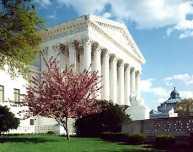
Confirmation Path May Run Through Florida
Roberts' low-profile role as an advisor to Republicans during the 2000 presidential recount fight is likely to be closely scrutinized.
Peter Wallsten - July 21, 2005
WASHINGTON — As the 2000 presidential recount battle raged in Florida, a Washington lawyer named John G. Roberts Jr. traveled to Tallahassee, the state capital, to dispense legal advice.
He operated in the shadows at least some of those 37 days, never signing a legal brief and rarely making an appearance at the makeshift headquarters for George W. Bush's legal team.
But now Roberts has been selected for the very Supreme Court that put Bush into office by settling the recount, chosen by the president to replace the swing vote in that 5-4 decision. And his work in Florida during that time is coming into focus, giving critics some ammunition to paint a respected jurist with an apparently unblemished legal career as an ideological partisan.
Republican lawyers who worked on the recount said Wednesday that Roberts advised Gov. Jeb Bush on the role that the governor and the Florida Legislature might play in the recount battle. At the time, when GOP officials feared that Democrat Al Gore might win a recount battle in court, Republican state lawmakers were devising a plan to use their constitutional power to assign the state's electoral votes to George W. Bush — a proposal criticized by Democrats.
Responding to questions Wednesday about Roberts' role in Florida, a spokesman for Gov. Bush's office said that Roberts had been recommended to the governor, although the spokesman gave no further specifics, and that the two had not known each other until the recount. Miami trial lawyer Dean Colson, who met Roberts when both were law clerks for Chief Justice William H. Rehnquist and who was best man at Roberts' wedding, is also close personally with Gov. Bush.
[...] Critics, though, were quick to say that Roberts' role in the 2000 election, however minor, suggested that he was not merely the bookish legal scholar described by his supporters.
[...] Three years later, President Bush nominated Roberts to the U.S. Court of Appeals for the District of Columbia Circuit. His position on that court, often a steppingstone to the Supreme Court, paved the way for Tuesday's announcement, the culmination of Roberts' legal career.
Read More >>
16 July 2005
Diebold rep gave $10,000 to county GOP
July 16, 2005
A contractor who represents Diebold Election Systems arrived at the office of Franklin County Board of Elections Director Matthew Damschroder with an open checkbook on the same day the county was opening bids for voter-registration software.
Pasquale "Pat" Gallina arrived unannounced, Damschroder said.
"I’m here to give you $10,000," the elections director recalls Gallina saying. "Who do I make it payable to?"
"Well, you’re certainly not going to make it out to me," Damschroder says he told Gallina. "But I’m sure the Franklin County Republican Party would appreciate a donation."
Gallina wrote the check, and Damschroder says he took it on Jan. 9, 2004. That weekend, Damschroder said, he mailed the check to the county party. Damschroder had been executive director of the party until June 2003, when he was appointed director of the elections board.
Diebold, the highest of four bidders, didn’t get the software contract, and Damschroder says he never recommended the company.
Gallina said yesterday that the $10,000 was his money and had nothing to do with Diebold. He said he’s always supported county Republican parties in areas where he lives.
"I donate to Licking and to Franklin," he said.
The check incident remained between Gallina and Damschroder until late last month when an assistant county prosecutor called Damschroder. Election Systems & Software, a company that is suing Secretary of State J. Kenneth Blackwell over the state’s policies for buying electronic voting machines, wanted to talk with Damschroder about allegations that Diebold was paying to play, the prosecutor told him.
Damschroder told him about the $10,000 check and had another story to tell.
In May, he said, Gallina called him and bragged about a $50,000 check he had written to Blackwell’s "political interests."
"Isn’t it great that Diebold and the county are going to do business?" he says Gallina asked him.
Damschroder said Gallina went on to tell him that he had met with Norm Cummings, a Blackwell campaign consultant, in Washington, D.C., to work out a deal: Diebold would cut the price of its electronic voting machines to $2,700 each if the company had a guarantee that it would receive all of the state’s business.
"Then Gallina tells me that he then wrote a check for $50,000 to Blackwell’s political interests."
Read More >>
July 16, 2005
A contractor who represents Diebold Election Systems arrived at the office of Franklin County Board of Elections Director Matthew Damschroder with an open checkbook on the same day the county was opening bids for voter-registration software.
Pasquale "Pat" Gallina arrived unannounced, Damschroder said.
"I’m here to give you $10,000," the elections director recalls Gallina saying. "Who do I make it payable to?"
"Well, you’re certainly not going to make it out to me," Damschroder says he told Gallina. "But I’m sure the Franklin County Republican Party would appreciate a donation."
Gallina wrote the check, and Damschroder says he took it on Jan. 9, 2004. That weekend, Damschroder said, he mailed the check to the county party. Damschroder had been executive director of the party until June 2003, when he was appointed director of the elections board.
Diebold, the highest of four bidders, didn’t get the software contract, and Damschroder says he never recommended the company.
Gallina said yesterday that the $10,000 was his money and had nothing to do with Diebold. He said he’s always supported county Republican parties in areas where he lives.
"I donate to Licking and to Franklin," he said.
The check incident remained between Gallina and Damschroder until late last month when an assistant county prosecutor called Damschroder. Election Systems & Software, a company that is suing Secretary of State J. Kenneth Blackwell over the state’s policies for buying electronic voting machines, wanted to talk with Damschroder about allegations that Diebold was paying to play, the prosecutor told him.
Damschroder told him about the $10,000 check and had another story to tell.
In May, he said, Gallina called him and bragged about a $50,000 check he had written to Blackwell’s "political interests."
"Isn’t it great that Diebold and the county are going to do business?" he says Gallina asked him.
Damschroder said Gallina went on to tell him that he had met with Norm Cummings, a Blackwell campaign consultant, in Washington, D.C., to work out a deal: Diebold would cut the price of its electronic voting machines to $2,700 each if the company had a guarantee that it would receive all of the state’s business.
"Then Gallina tells me that he then wrote a check for $50,000 to Blackwell’s political interests."
Read More >>
02 July 2005
Ohio Democrats victims of break-in
Thieves grab computer from party headquarters in Columbus
02 Jul 2005
Thieves targeted the Ohio Democratic Party Headquarters this week, stealing a computer and a high-tech communications gadget belonging to party chairman Denny White. The break-in occurs at a time when the Ohio Republican Party is threatened by one of the largest scandals to hit the state's government in decades.
Read More >>
Thieves grab computer from party headquarters in Columbus
02 Jul 2005
Thieves targeted the Ohio Democratic Party Headquarters this week, stealing a computer and a high-tech communications gadget belonging to party chairman Denny White. The break-in occurs at a time when the Ohio Republican Party is threatened by one of the largest scandals to hit the state's government in decades.
Read More >>
01 July 2005
Democracy at Risk: The 2004 Election in Ohio
After the 2004 election, there were widespread reports of serious voting problems in Ohio. The Democratic National Committee's Voting Rights Institute made a commitment to investigate these reports and ascertain exactly what happened on November 2 in Ohio.
An exhaustive five-month investigation by the VRI's research and investigative team identified grave problems in the administration of Ohio's voting system. More than 1 in 4 voters in Ohio faced problems at the polls, including illegal requests for identification, long lines, poorly trained election officials, and more. There were also dramatic disparities in voting conditions among different races; African Americans waited nearly three times as long on average as whites to vote.
Most important, the VRI's comprehensive investigation resulted in concrete recommendations that will help protect every American's right to vote and to have that vote counted. These recommendations cover voting equipment, training for poll workers, uniform standards, and much more.
Get the facts about exactly what happened in Ohio in 2004, and learn how Democrats are fighting to protect our rights.
Read More and Download Full Report >>
After the 2004 election, there were widespread reports of serious voting problems in Ohio. The Democratic National Committee's Voting Rights Institute made a commitment to investigate these reports and ascertain exactly what happened on November 2 in Ohio.
An exhaustive five-month investigation by the VRI's research and investigative team identified grave problems in the administration of Ohio's voting system. More than 1 in 4 voters in Ohio faced problems at the polls, including illegal requests for identification, long lines, poorly trained election officials, and more. There were also dramatic disparities in voting conditions among different races; African Americans waited nearly three times as long on average as whites to vote.
Most important, the VRI's comprehensive investigation resulted in concrete recommendations that will help protect every American's right to vote and to have that vote counted. These recommendations cover voting equipment, training for poll workers, uniform standards, and much more.
Get the facts about exactly what happened in Ohio in 2004, and learn how Democrats are fighting to protect our rights.
Read More and Download Full Report >>
Subscribe to:
Posts (Atom)